Expert: Preventing suicide needs the entire public
ST. CLOUD — Preventing suicide is an enormous challenge.
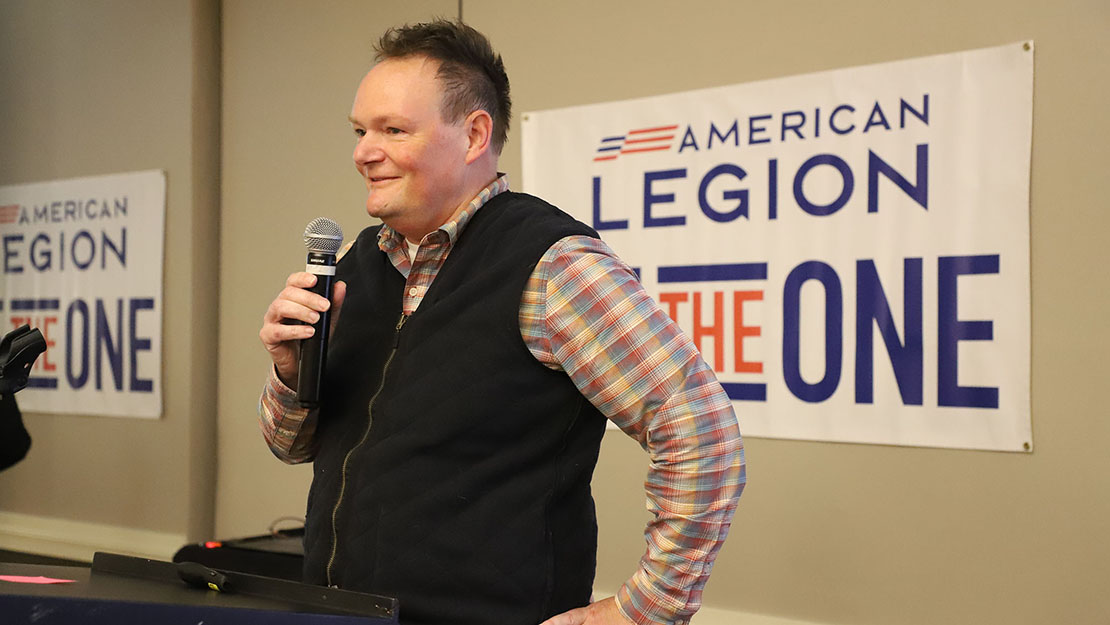
That was the message from Adam Walsh, an independent consultant to the Columbia Lighthouse Project, which collaborates with The American Legion in the “Be the One” mission of preventing veteran suicides.
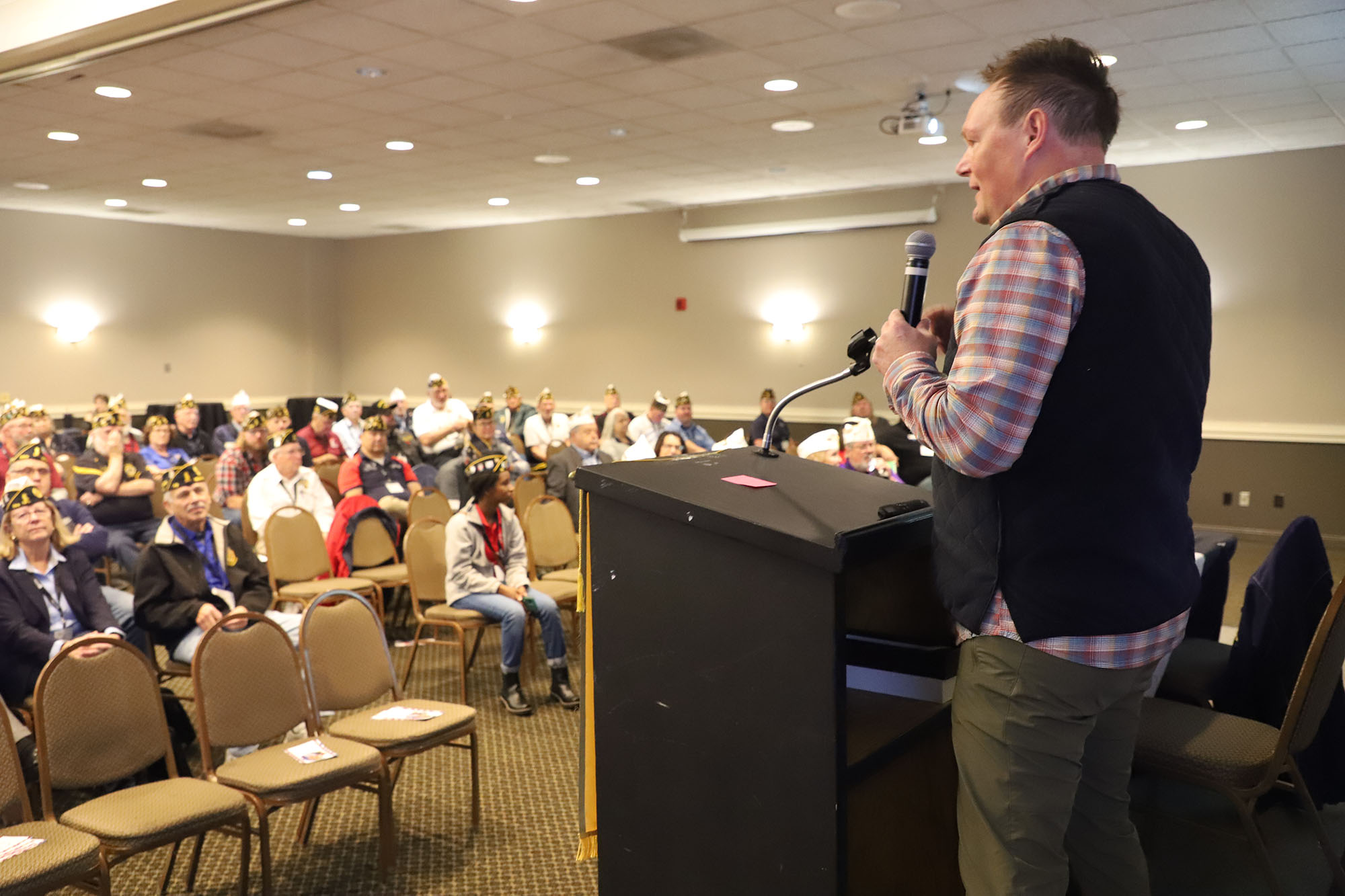
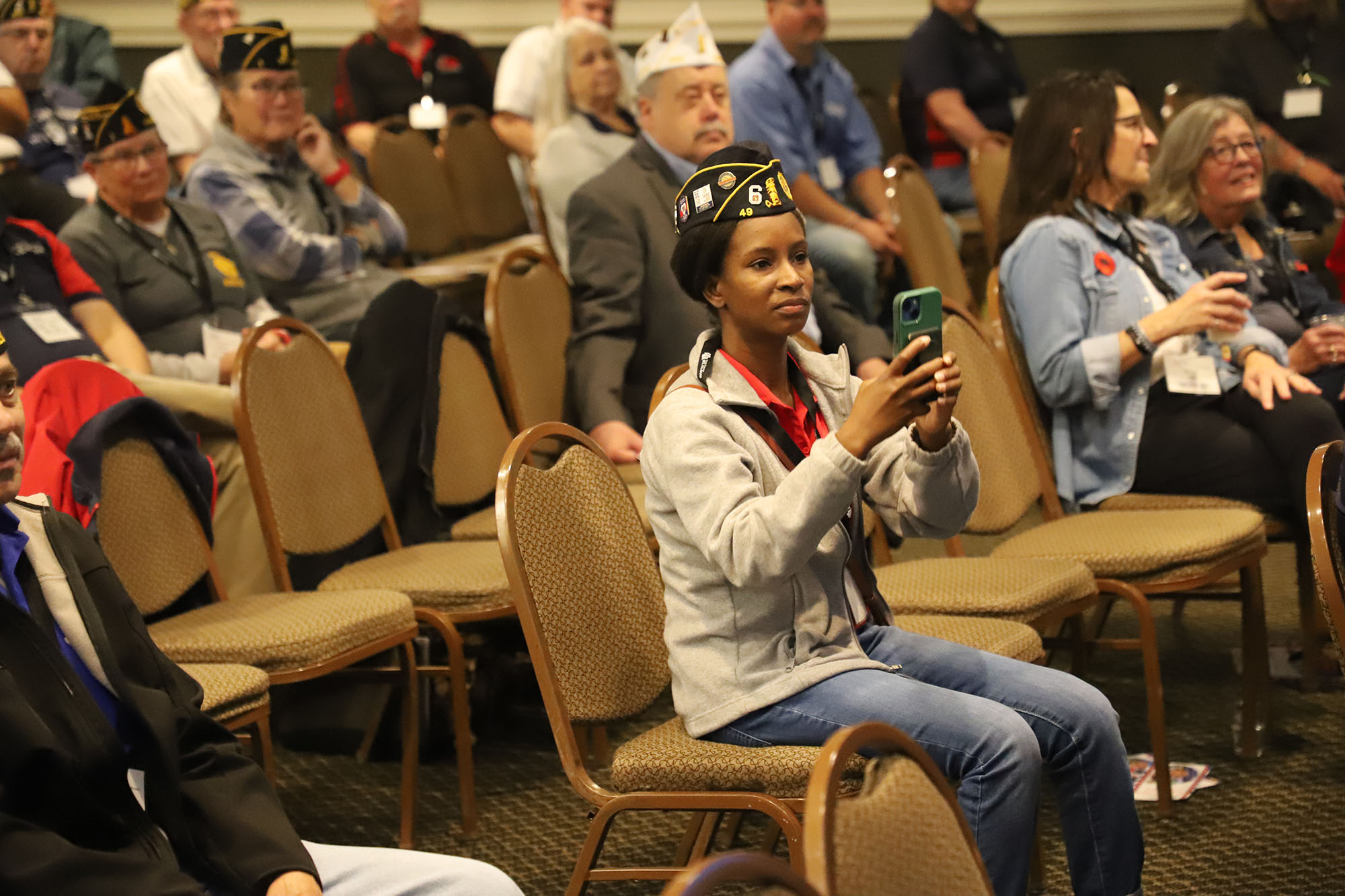
Walsh, an expert who has worked in the field of suicide prevention as a career, including for the Pentagon, spoke on Oct. 25 at the Minnesota American Legion Fall Conference in St. Cloud.

Why is it such a challenge?
Walsh drew a contrast between the medical models, for conditions modern medicine can address in hospitals and clinics across the nation, versus a public health model, one where the medical establishment needs the general public.
“To meet this mission of preventing suicide in the veterans community, we need you all,” he said.
“It isn’t working to expect them to come get clinical treatment. Not everyone needs therapy. Some need connectedness, brotherhood, camaraderie,” Walsh said.
On top of that, the number of suicides increased in 2022 to 49,476 from 43,183 in 2021.
“It was the highest number ever recorded in a single year in the United States,” Walsh said.
He said he had been accustomed to speaking about suicide to young people, such as active-duty Marines, but now, thanks to The American Legion, he is addressing the topic with older people, too.
He noted that suicide statistics often lag a few years and said his figures were the most recent available. The United States, he said, has been among only a few nations unable to reduce its suicide rates.
Nationally, the highest demographic for suicides is among white men 85 years or older, he said.
For veterans ages 55-75, it increased 4.4 percent. The rate for veterans 74 years an older increased by 4.9 percent.
In 2022, there were an estimated 12.8 million Americans seriously considering suicide, 3.7 million made a plan and 1.6 million attempted.
In 2022, 6,407 veterans in America died by suicide, an increase of 15 from 2021 and 129 from 2020. It was the second leading cause of death for veterans under age 45.
In 2022, there were 271 suicides among female veterans, 80 fewer than in 2021.
“That’s good to see,” Walsh said.
The strongest protector against suicides are connectedness: friends, family, pets.
“Sometimes, we need alone time, but we all need some sort of social interaction. Humans are social creatures,” he said.
Suicide risk doesn’t stay constant, Walsh said. It is fluid. That’s what makes preventing it so difficult. Factors vary for each person (with examples in parentheses): personal history (physical abuse, substance abuse, adverse childhood), disrupted social network (transitioning out of military, loss of job or purpose), judgment factors (sleep deprivation, drugs, alcohol), access to lethal means (unsecured firearms), stressors (loss of loved one, divorce, struggling at work, legal or financial problems), health issues (pain, decline in physical ability), contributing risk factors (impulsivity, shame, guilt, abandonment, isolation, medication side effect).
The most frequent risk factor, he said, was pain.
Walsh walked through some facts:
- Less than 1 percent of people who think about it die by suicide.
- It can take less than 10 minutes between thinking about suicide to acting on it. Putting time and distance between a person at risk and a means for suicide is an effective way to prevent death.
- More than half (54 percent) of people who died by suicide in the U.S. and about 58 percent of military suicide deaths did not have a mental health diagnosis. He said experts are not concerned only about people who are depressed or have a mental health crisis. Normal people can face unforeseen life events, pain and other factors.
- Several studies have shown that being deployed (including combat, length or number) is not associated with suicide risk among servicemembers.
Walsh instructed people to ask direct questions when dealing with a person who might be considering killing themselves: Have you wished you were dead or wished you could not wake up? Have you actually had any thoughts of killing yourself? Have you been thinking about how you might do this? Have you had any intention of acting on them?
He told the Legionnaires they need to stay in the moment with the person and push aside any distractions, maintain a positive body language, eyes connecting to the person, stay attentive and responsive, be calm and direct with a steady voice, listen carefully, do not judge and paraphrase and reflect back important details. After, be sure to take care of yourself, too.