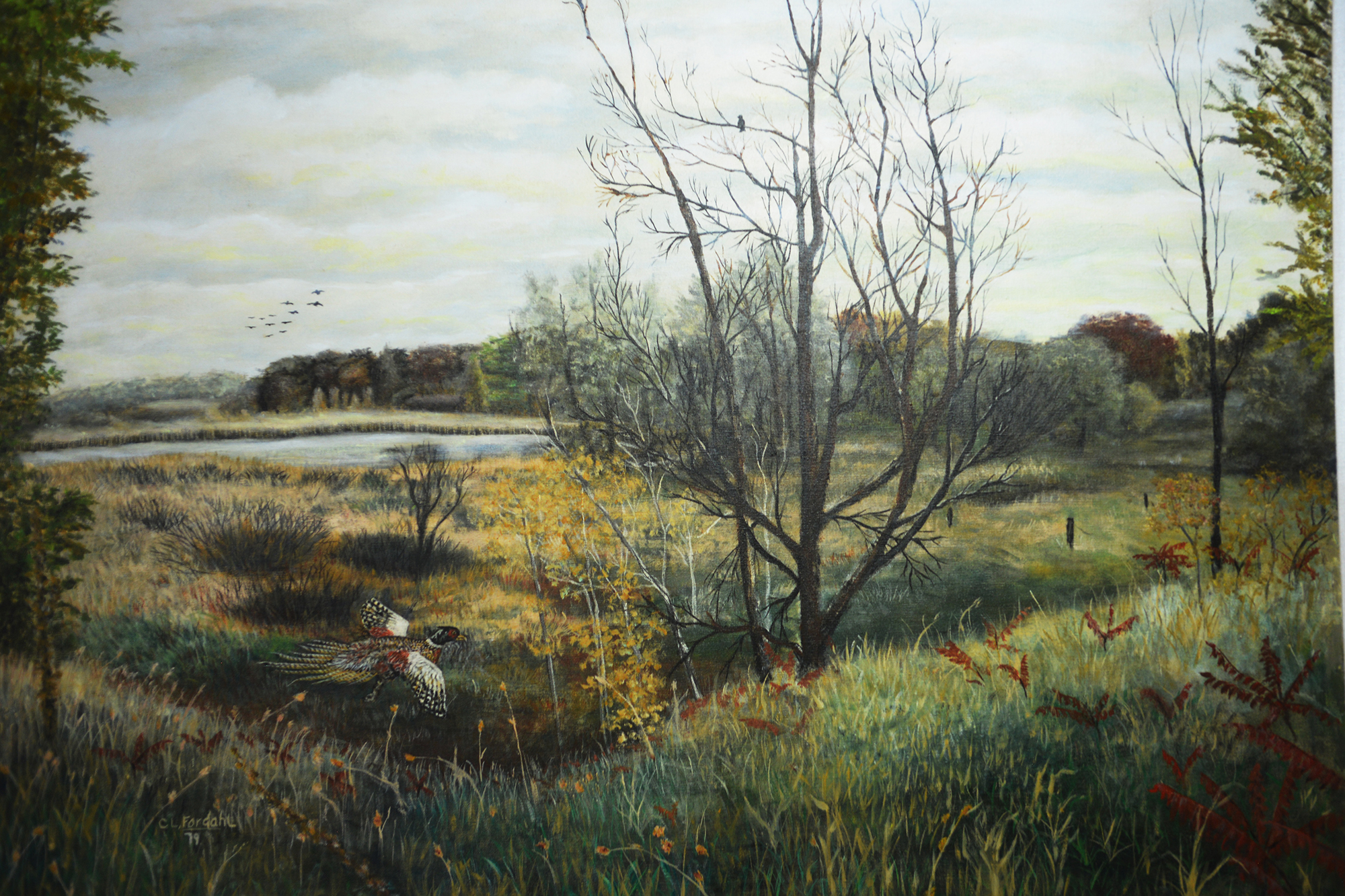
Combat artist Les Fordahl’s work appears in the Library of Congress
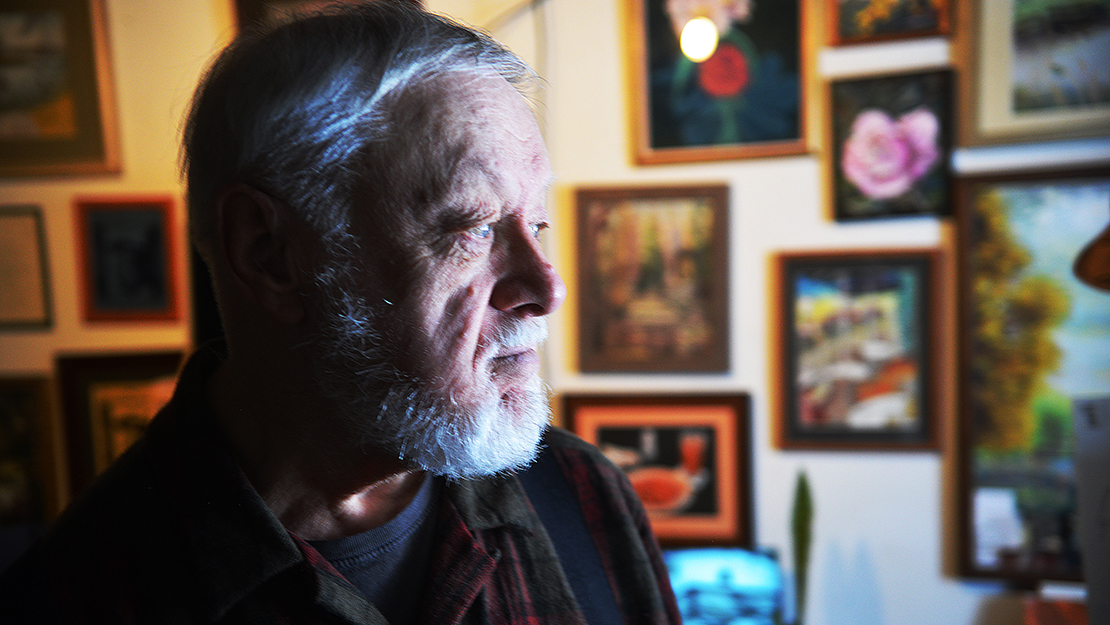
BLOOMINGTON — Carl “Les” Fordahl has been sketching since he was a little kid, and he still likes to draw things.
That skill paid off during the Vietnam War when he became one of a handful of military combat artists assigned to record the war. Much of his work in the war is now in the collection of the Library of Congress.
Fordahl, now 79 and a member of Bloomington Post 550, was born in Aitkin but spent his childhood in a variety of places including New Richmond and Star Prairie, Wis., and later at Medicine Lake in the western suburbs of the Twin Cities.

He remembers one house in Wisconsin where you could see through the walls.
The first time he got in trouble, he recalls was in a one-room school house in Wisconsin. “I pulled on Katy’s pigtail to get her attention. I shouldn’t have done that. But she spun around, and her pigtail hit the inkwell on my desk and the ink went flying. So I had to sit in the dunce stool in the corner of the room.
“The teacher let me go at lunchtime and I went out to the outhouse. I found a bunch of garter snakes there and I grabbed some and went waving them at the girls. I thought that was pretty funny.
“I was right back on the dunce stool.”
Fordahl lived on the north side of Medicine Lake for seven years, and graduated from Hopkins High School in 1964. He continued his drawing and painting, and got his first artistic commission when he was 14. He won an art contest in high school but he earned his money by shagging golf balls in the summer and doing a paper route in the winter.
“My parents had eight kids and there was no extra money.”
After a stint at Northwest Bible College in St. Paul, Fordahl was drafted into the Army. A friend convinced him that they should enlist for four years so they could attend intelligence school. He was assigned to the Army Security Agency Training Center and School at Fort Devens in Massachusetts.
“I was convinced to change my MOS to 81E, Army draftsman illustrator.”
In 1969 he was assigned to Germany to help out on a historical project to do a Congressional study of the army bases there. It was a 13-month assignment.
“I thought it was great. The Army was sending me to Europe all expenses paid. In my spare time, I traveled all over Europe in my Ford Taurus.”
The project ended in December of 1969, and he was sent to Vietnam to work on a project regarding charting Army coding. His top secret clearance was needed.
“I remember we flew into Cam Ranh Bay, and when the plane landed they just threw us off the plane and pushed us into a bunker. They told us not to even bring our stuff. The base was under attack.”
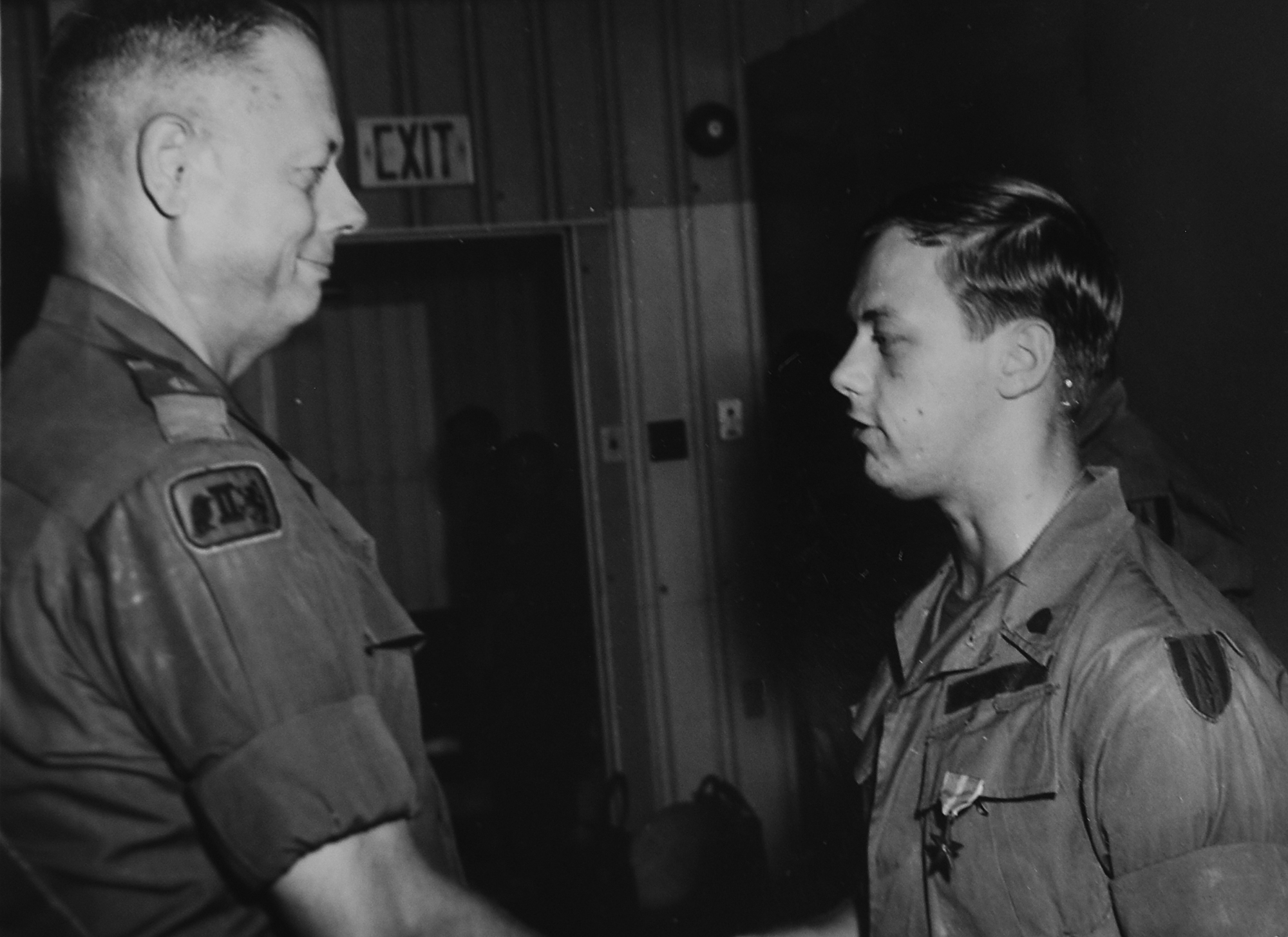
Fordahl was assigned to Long Binh, a post about 20 kilometers from Saigon.
“I remember the guys there told me that the Army Security Agency had information prior to the Tet Offensive in 1968, but few bases believed them. Long Binh did and was better prepared for the attack.”
He worked in the 1st Signal Brigade on the chart coding project, which had been going on for two years.
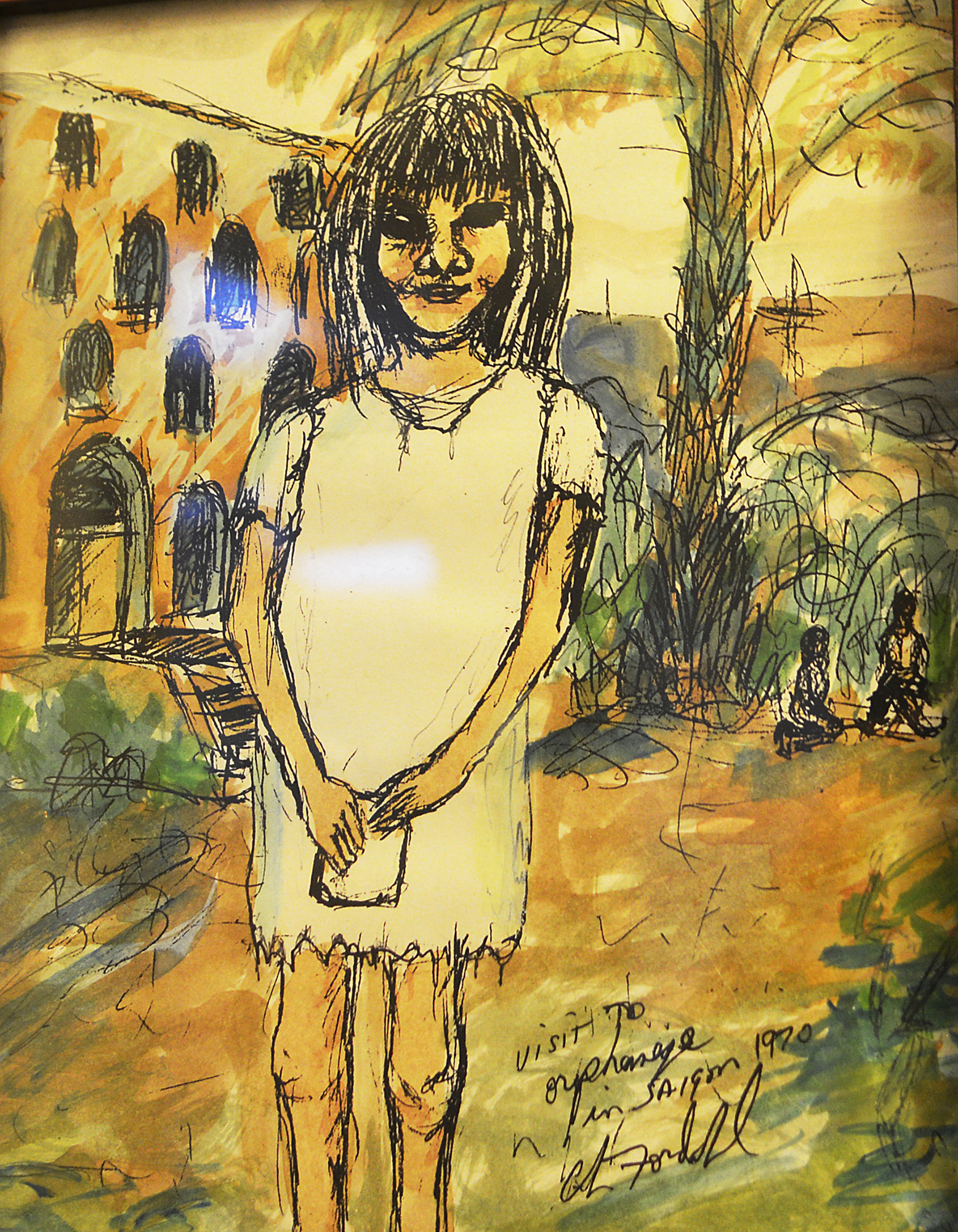
As soon as he arrived at the base, he was told that Bob Hope would be there for a Christmas show in two weeks, but the base had not done any posters or publicity for the event. His first piece of art in Vietnam was a flyer with Hope’s profile on the front.
His job didn’t require any sketching, but he loved to draw and to sometimes take those drawings and make paintings out of them. He asked a colonel if he could have paper the Army was throwing out because of mold. The colonel said yes.
“It wasn’t like you could go down to Blick’s on the next mountain and get art supplies.”
The Vietnam Combat Artists Program had been established in 1966 using teams of soldier-artists to make pictorial records of the war as part of the military history of the combat. Nine combat artist teams made up of soldiers operated in Vietnam according to Wikipedia.
“They pulled most of us out of the ranks. Combat artists go back over 5,000 years and had been used a great deal in World War I and World War II.”
So in 1970, Fordahl’s avocation became his vocation as he joined Combat Artist Team 9. Fordahl’s team was the last combat artist team the Army employed. He said the combat teams should not be confused with the civilian art teams.
“We were embedded with the troops,” he said.
There was one problem, though. The Army wanted him to finish the coding chart project which was nearing its end, but was not completed.
“They gave me 72 hours to complete it, and it took me 69 hours and 39 minutes to do it. I had one 20-minute nap in that time.”
Perhaps worse was that the base was being attacked while he was working on the project. “They turned on lights at the other end of the base to draw the fire, but even where I was, the ground was shaking.”
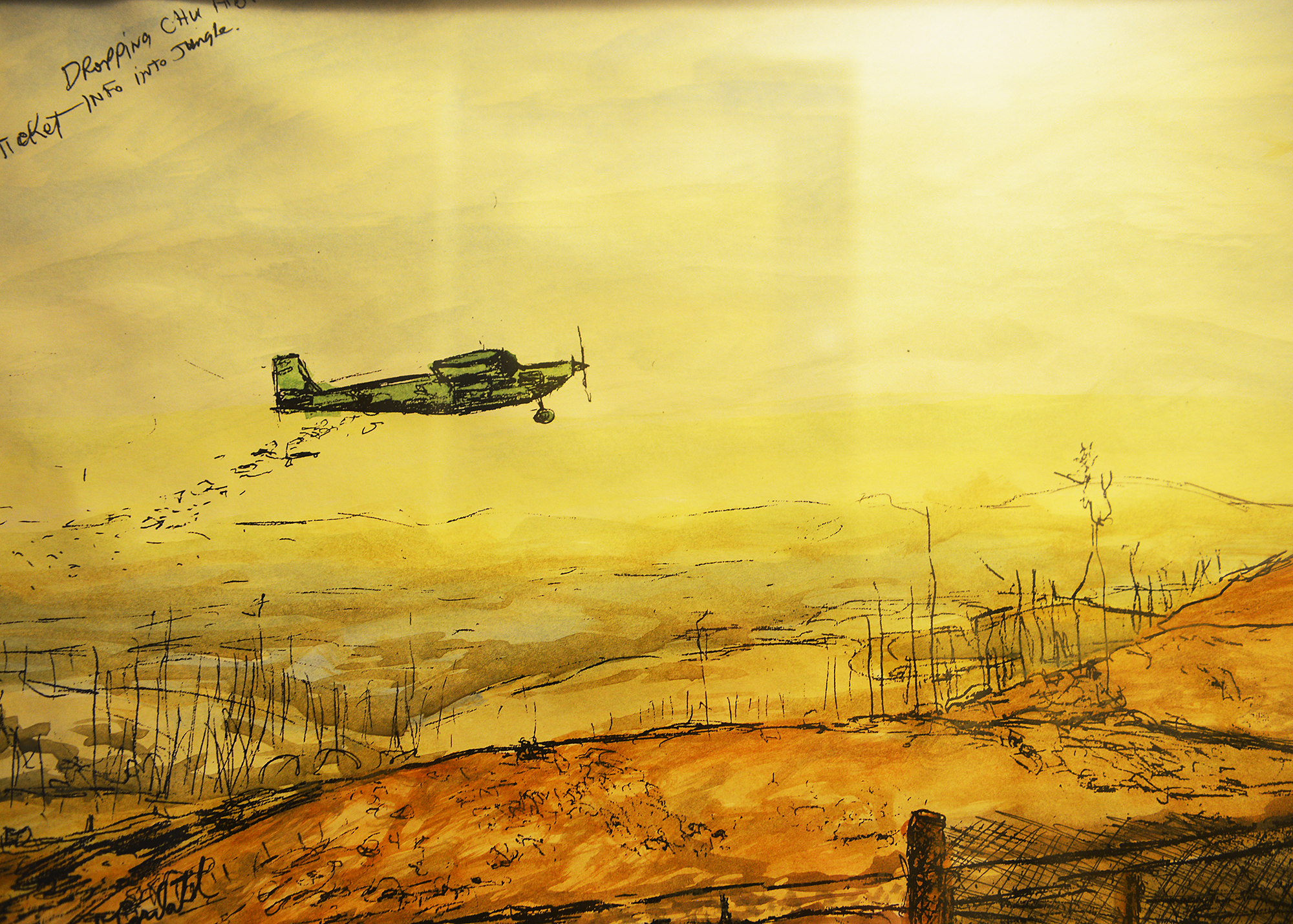
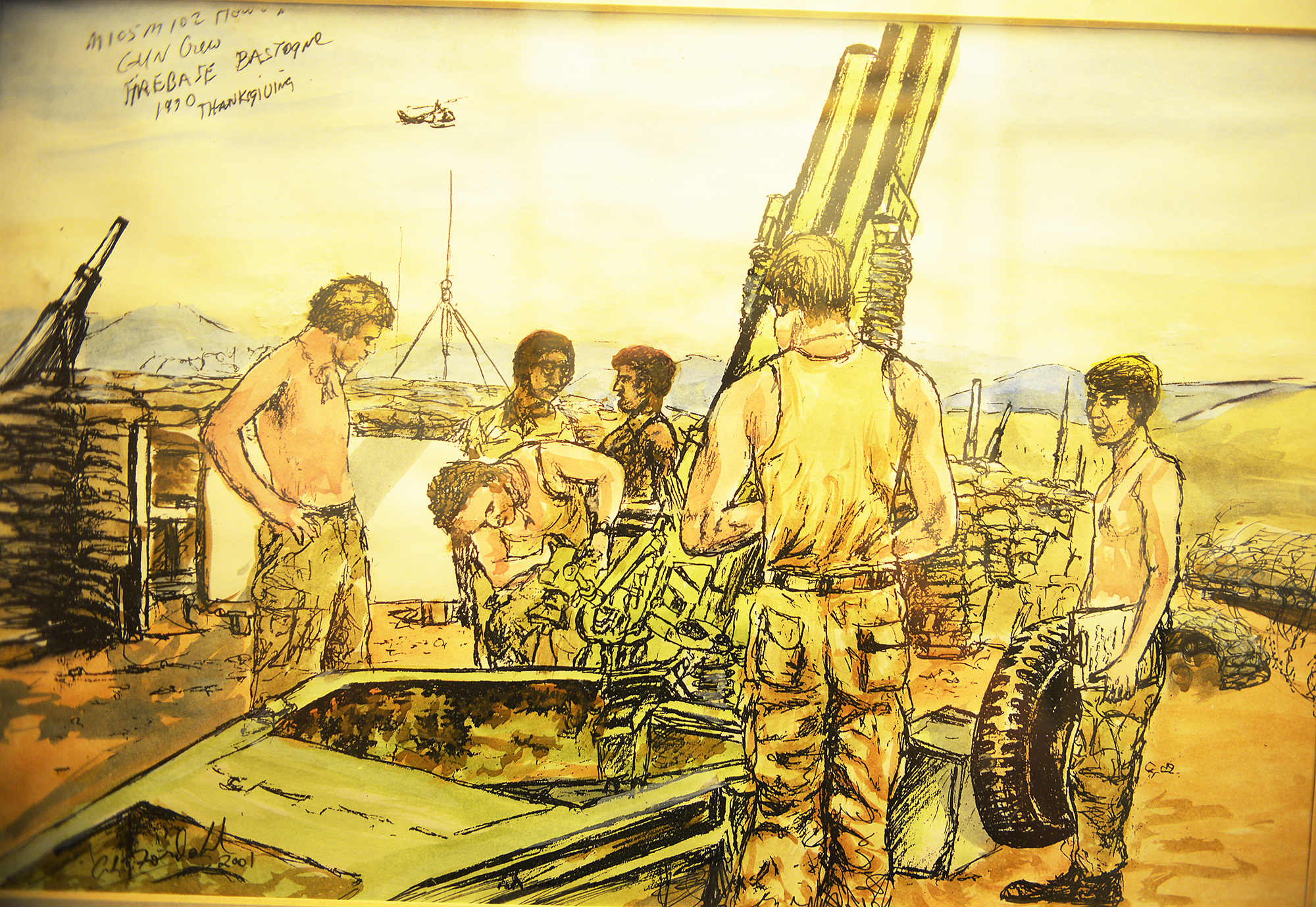
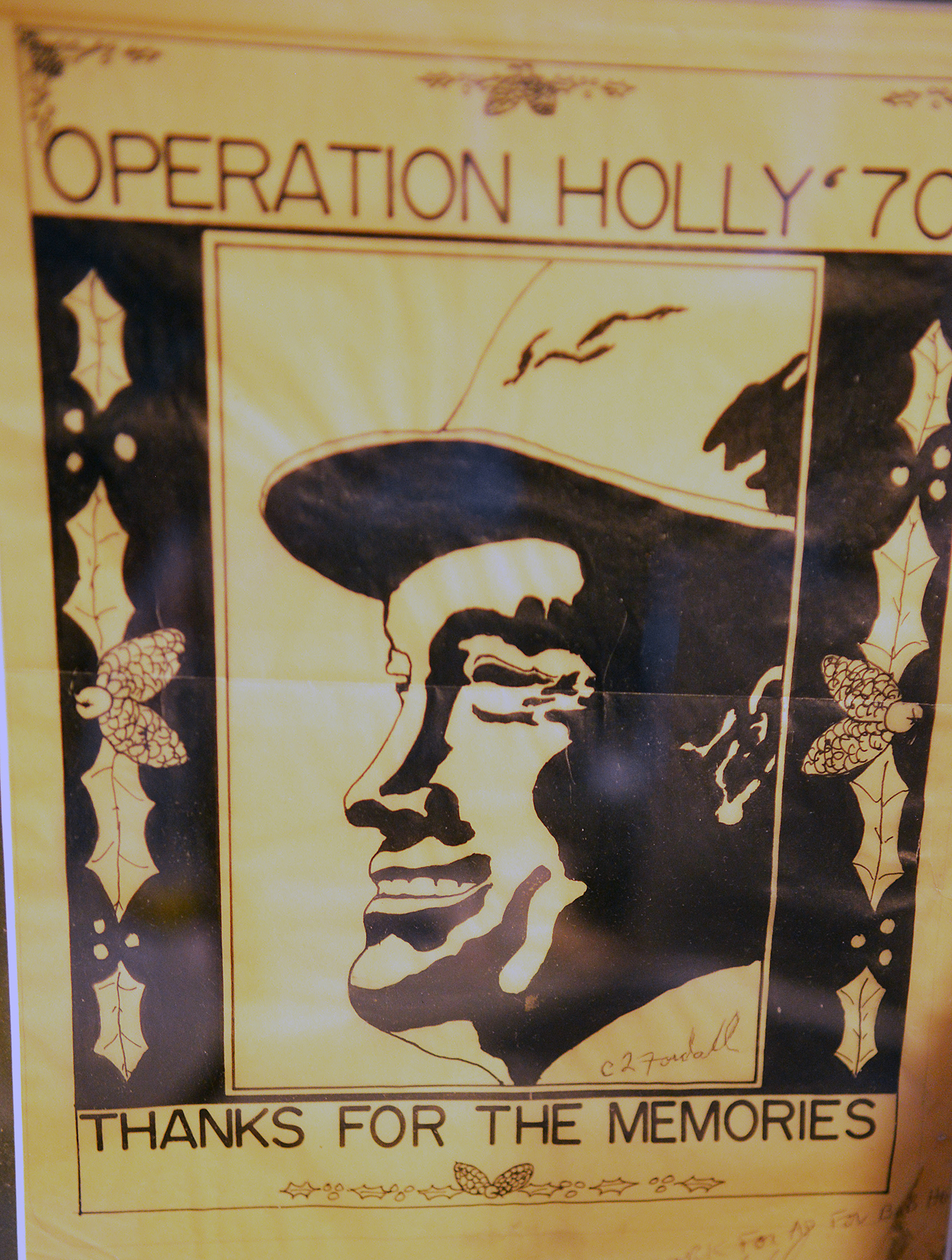
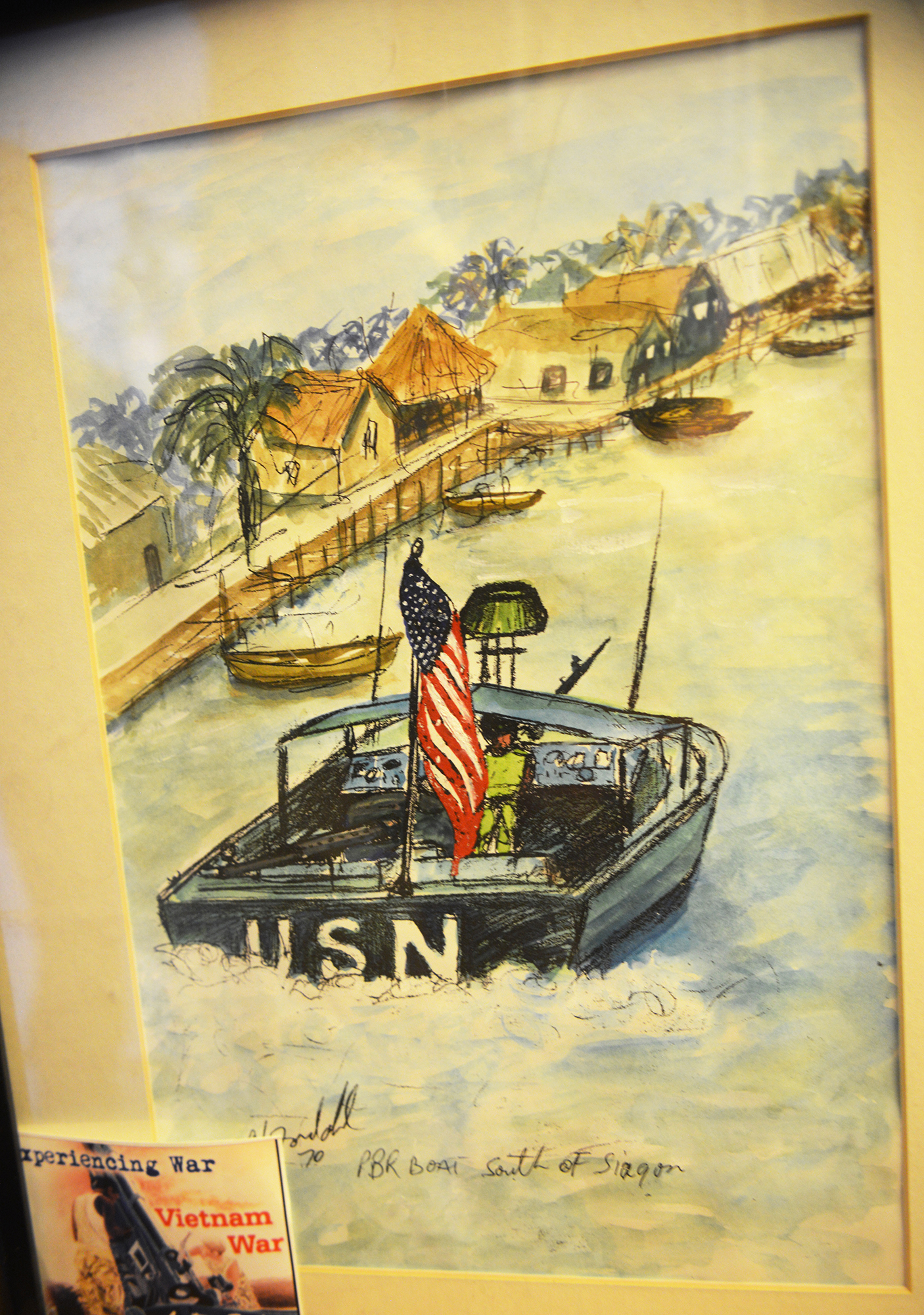
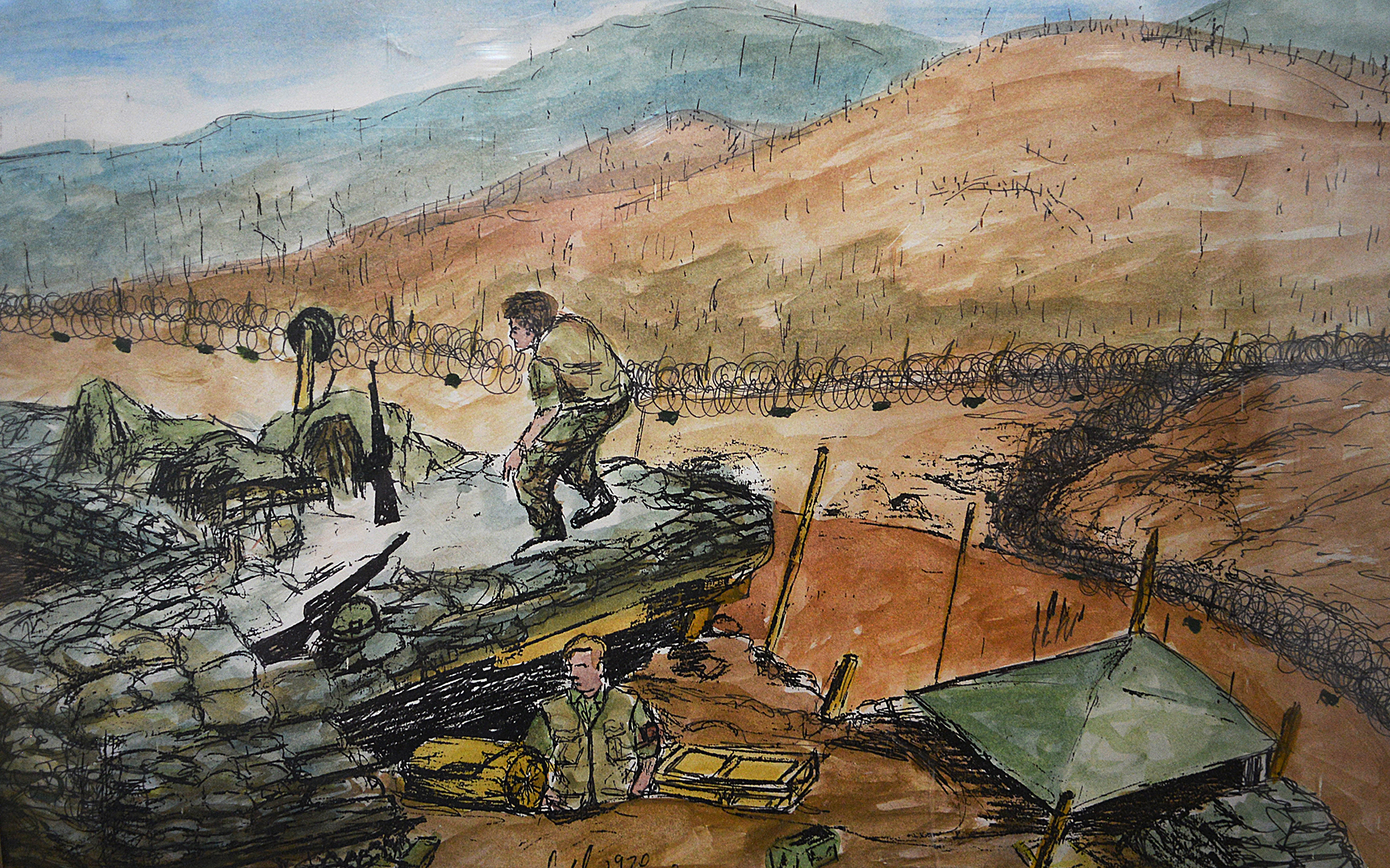
Fordahl completed the project and became part of the combat artist team which spent two to three days with the Special Forces, at artillery bases, at fire bases and even riding the Navy’s swift boats on Vietnam’s rivers. Wherever the troops were, the combat artists went too.
“I was at a fire base and I was wondering where I was going to sleep that night. A sergeant told me that his bed was the first one inside the tent. He said I could have it because he wasn’t using it. I asked him why. He said he slept up in the observation tower. He told me he couldn’t put up with the snakes and the rats.”
Several times he volunteered to stand guard duty at the fire bases to give the weary soldiers there a break.
During that time, he completed 131 sketches, and completed five full-color paintings. The team used the facilities of the 221st Signal Company quarters at Long Binh, mainly used by photographers.
“You had to sketch fast, and then bring them back to the studio and fill in the details. I had a good memory for the details.” Fordahl would also use a camera to record the scene.
One technique was to take a pencil sketch, bring it back to the studio, and put it up against a canvas and rub the sketch into it. From there, it could be filled out or painted. The only problem was that you ended up with a backwards illustration.
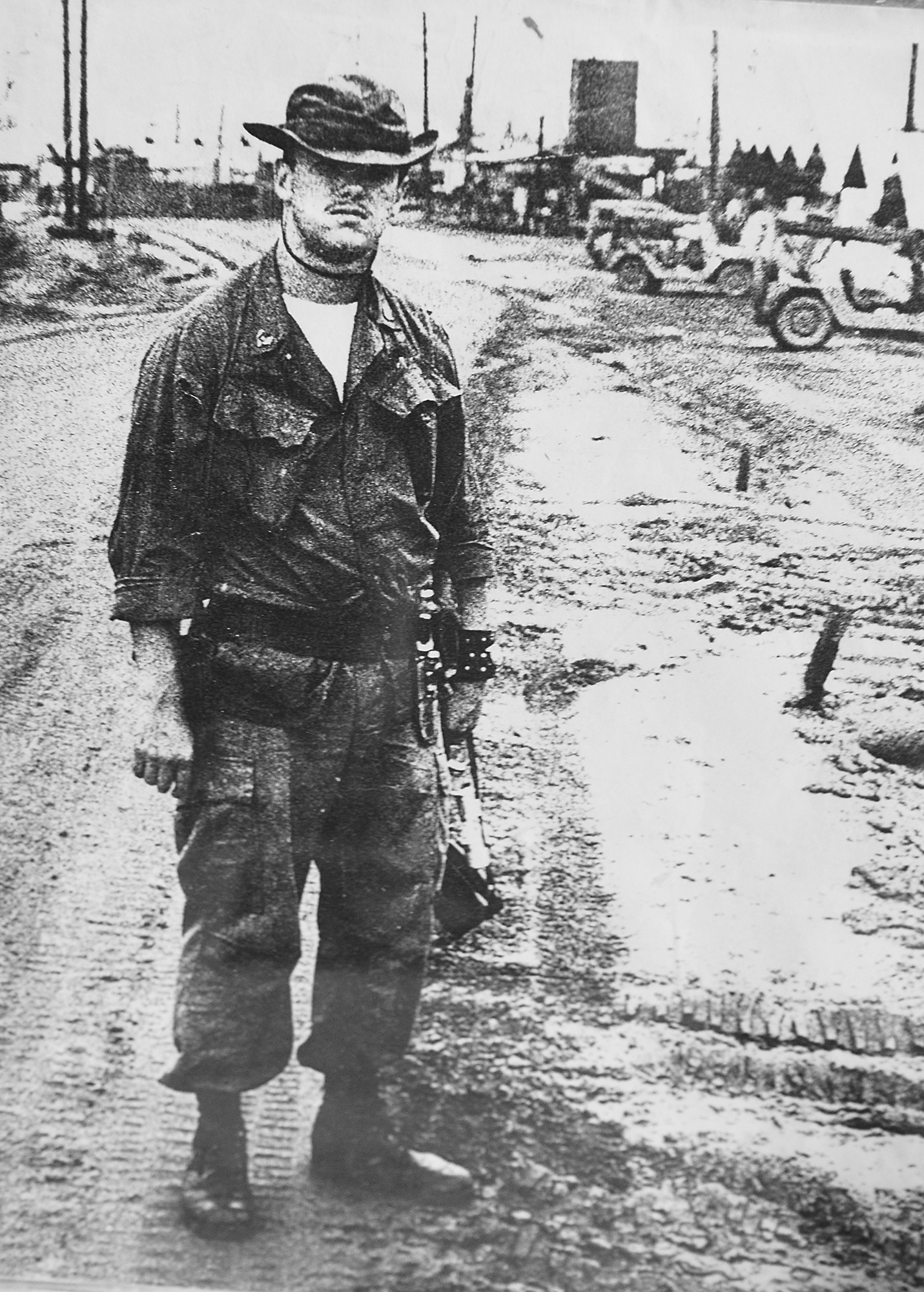
He pursued his combat artistry for seven months until his enlistment ran out. He remembers perhaps his scariest moment was on a helicopter ride to an assignment.
“We covered everything from the Delta to the DMZ. I was on this chopper when I heard the pings of a bullet come through one side of the helicopter and go out the other side. I traced the line of the bullet and found that it missed my head by about six inches.”
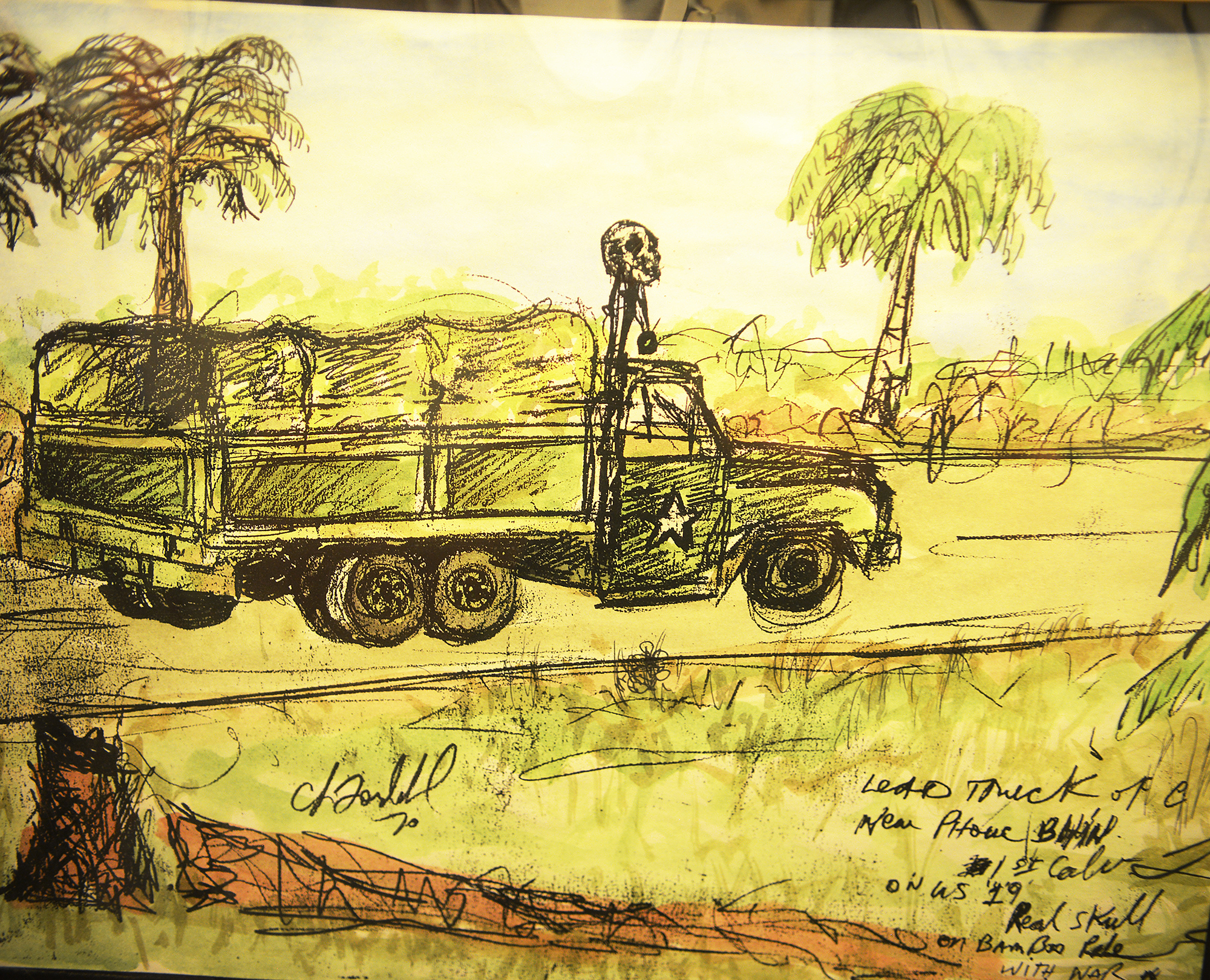
For his willingness to travel to the dangerous places of the war, he was awarded the Bronze Star.
He got out of the service on Feb. 3, 1971, and was at the airport in Oakland, California, when he was accosted by a group of protesters. Oakland was a hot spot for Vietnam protesters during the war.
“They told us not to wear our uniforms, but I had already packed my civilian clothes.”
The incident soon escalated and Fordahl was thrown bodily into a bunch of tables and chairs in the terminal.
“The pilot of the plane and another person saw what was going on and rescued me and put me on the plane. I had lost a tooth. When I got on the plane there was a Marine and another Army guy, and we wanted to go back out and take on these protesters. We were pretty hot.”
Cooler heads prevailed, though, and Fordahl arrived in Minneapolis intact. A sad reminder of the fight was that he had 131 sketches he had made in Vietnam in tubes, and during the melee, one of the tubes was lost that contained 46 sketches. It was never recovered.
Fordahl arrived home in a foul mood. “I was pissed off at God and everybody else. I threw the sketches I had left in a closet and didn’t look at them for years.”
Time went by. Fordahl married and had two sons. He built a house in Bloomington, pounding every nail in the structure, using lumber discarded at some of the major housing projects around the area.
He went to work at the Post Office and stayed there for 38 years delivering mail.
“I was the only carrier in the Tom Burnett Post Office on the west side of Bloomington to complete my route during the Halloween blizzard in 1991. I had to pay a guy $20 to plow me out at one point, but I delivered every house. I heard from a family later that I brought them medications that were critical.”
Among his co-workers, his intrepid feat earned him the nickname “the Legend.”
He also started to get involved in his community, using his art talent and his combat experience to help people create art. A short list of his accomplishments over the years includes:
- Fordahl served on the board of directors of the Bloomington Arts for 12 years.
- Taught art classes at the Masonic Home for 22 years.
- Taught art at the Minneapolis VA for five years.
- He continued his work at the VA as a volunteer pushing wheelchairs, a job he still does and enjoys. “I get my 10,000 steps in.”
- Painted set backgrounds at the Bloomington Center for the Arts theater for 15 years.
- Has worked with the city on a new veterans’ memorial which is expected to break ground this spring.
- Was chosen to display his war art at an event featuring Gen. John Vessey, the former Chairman of the Joint Chiefs of Staff.
- Was given a Veterans Voice Legacy Award by the Minnesota Humanities Center.
“I’ve had some great experiences. Every night and every morning, I tell God how grateful I am.”
In 2012, out of the blue, he received a call from the Library of Congress. They were interested in preserving the work of the combat artists in Vietnam, and asked if he would donate his work. He was glad to do so.
The Library now has 87 original sketches and five paintings made from the sketches. His work has appeared in collections and even in text books.
Why has the work of the Vietnam combat artists continued to interest people over 50 years later?
“I think because the combat artist has a specific relationship to the war that others don’t. He’s right on site. He’s in the moment.”
Fordahl lives in Bloomington in the house he built with dozens of copies of his artwork lining almost every square inch of his walls.