‘We’re stronger without them … Push it under’
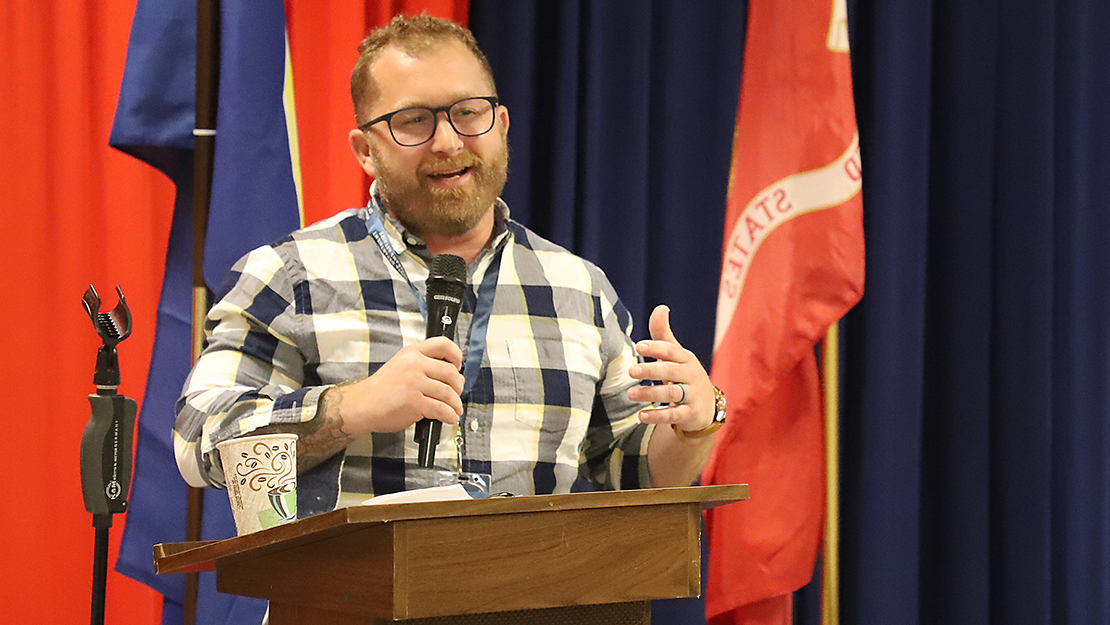
Marine veteran Dan Hanson tells of suicide of a loved one
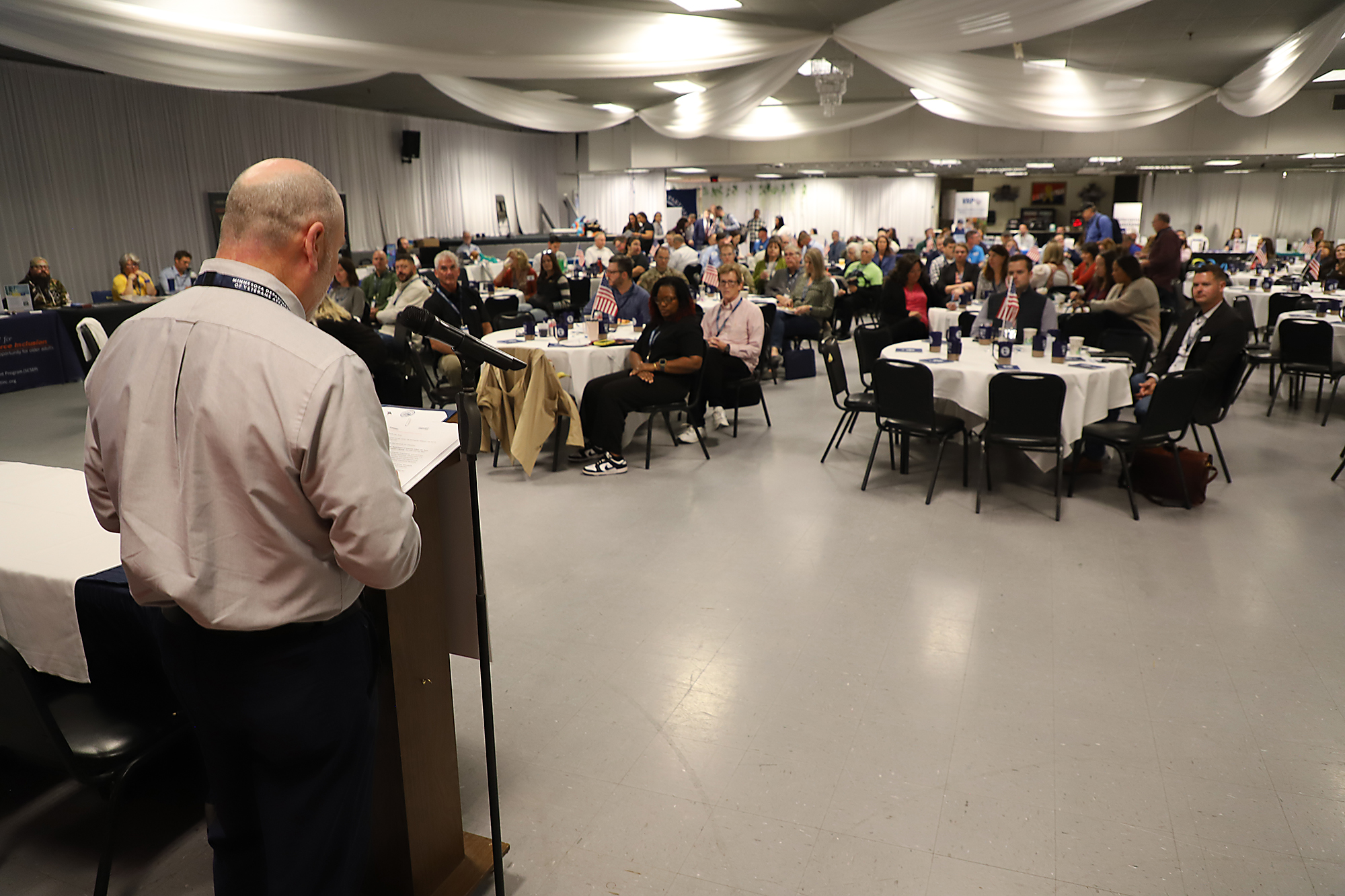
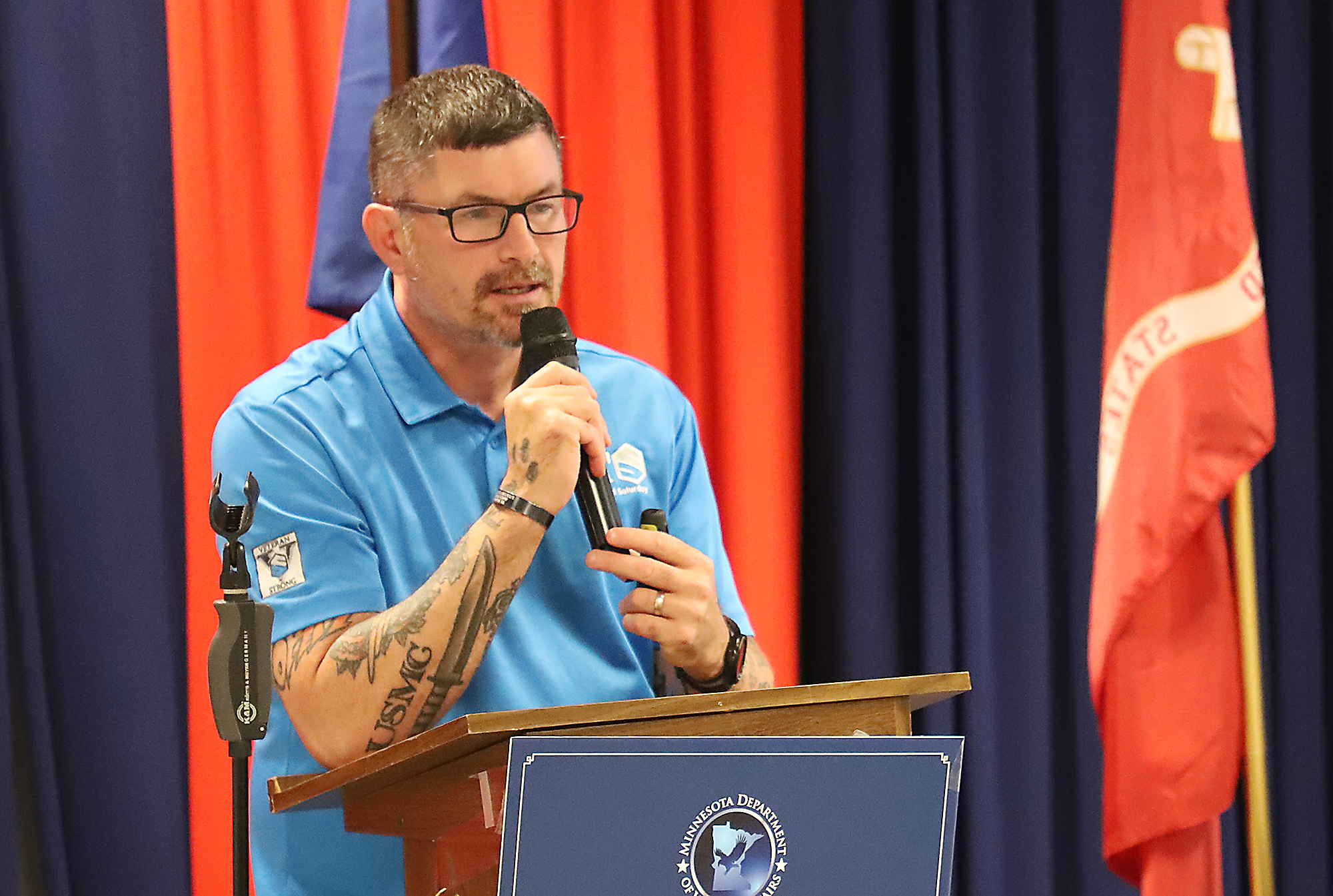
BLOOMINGTON — Marine veteran Dan Hanson told a funny story, followed by a sorrowful story of loss, at the Minnesota Veteran Suicide Prevention Summit, held Sept. 30 at Bloomington American Legion Post 550 and VFW Post 1296.
During boot camp, he regularly was getting wrecked by drill instructors because of his older brothers sending mail. They had been Marines, too.
One day, he got a package. It was a musical dancing Marine hamster holding an NCO sword. This only meant more trouble! How could his brothers be this mean?
An instructor sent him to the head to get a plunger. They made Hanson dance with a plunger like the hamster danced with the sword.
After graduation, Hanson learned the hamster wasn’t sent by his brothers. It was his older sister! She genuinely thought it was cute and didn’t know that it would bring attention to him at boot camp.
In 2004, Hanson, a kid from Moose Lake, was deployed to Ramadi. One of the Marines there was caught stealing gear and shot himself in a chapel.
“It was shocking to us,” he said.
They went on the lose 35 Marines in Ramadi, he said.
Unit leadership tried to address post-war mental health by asking questions and asking for shows of hands, to which no one would respond, of course. There were suicides.
They redeployed. This time, six or seven more died overseas.
The unit didn’t address mental health after returning home this time. And when suicides happened, Hanson and other Marines viewed them as losing the weak link in a chain.
“We’re stronger without them. That was the attitude. Push it under.”
Another deployment came up, and Hanson was getting out. He was in the remain-behind element.
His 2nd Battalion, 4th Marine Regiment made the national news this time when their top enlisted man, Sgt. Maj. Joseph Ellis, 40, was killed by a suicide bomber in Iraq’s Anbar province.
Shortly after, a Marine died by suicide that no one would consider “a weak link.” It began to shatter Hanson’s preconceptions. Hanson went on to enter civilian life.
On March 22, 2007, Dan Hanson got a call from his brother. Travis had lost job after receiving a DUI in November. He lived in North Hudson, Wis., and just wanted Dan to come over a talk and drink beers together.
Dan went out that night with the full intention of making over to Travis’ place. But Dan started at other locations and, by the end, never made it to North Hudson.
That night, Travis killed himself. He left a letter.
“I’ll always remember that day,” Dan Hanson said. “Why do we do what we do?”
He called his brothers and sisters and cried and cried.
The ripple effect of suicide is very real, he said.
“I let down the person that I love most in the world,” Hanson said.
He spent eight months of ruining relationships, binging, even going to jail.
“I went from indestructible to everything is bad and everything I do is a failure,” he said.
However, Hanson had two small children. He kept promising to get better for their sake.
“Like Mike Tyson says, ‘Everybody has a plan until they get punched in the face.’”
Hanson went through therapy, and the counselors didn’t tell him what he needed to hear: It wasn’t his fault.
Hanson views himself differently now. He sees having a sense of purpose as an anchor.
“After I lost my brother, I lost purpose and filled it with drugs, booze and fights. Just terrible behavior,” he said.
Behavior is tied to identity. If a person has a healthy identity, then they are more capable of struggling with loss, Hanson said.
“Suicide is often the removal of hope.”
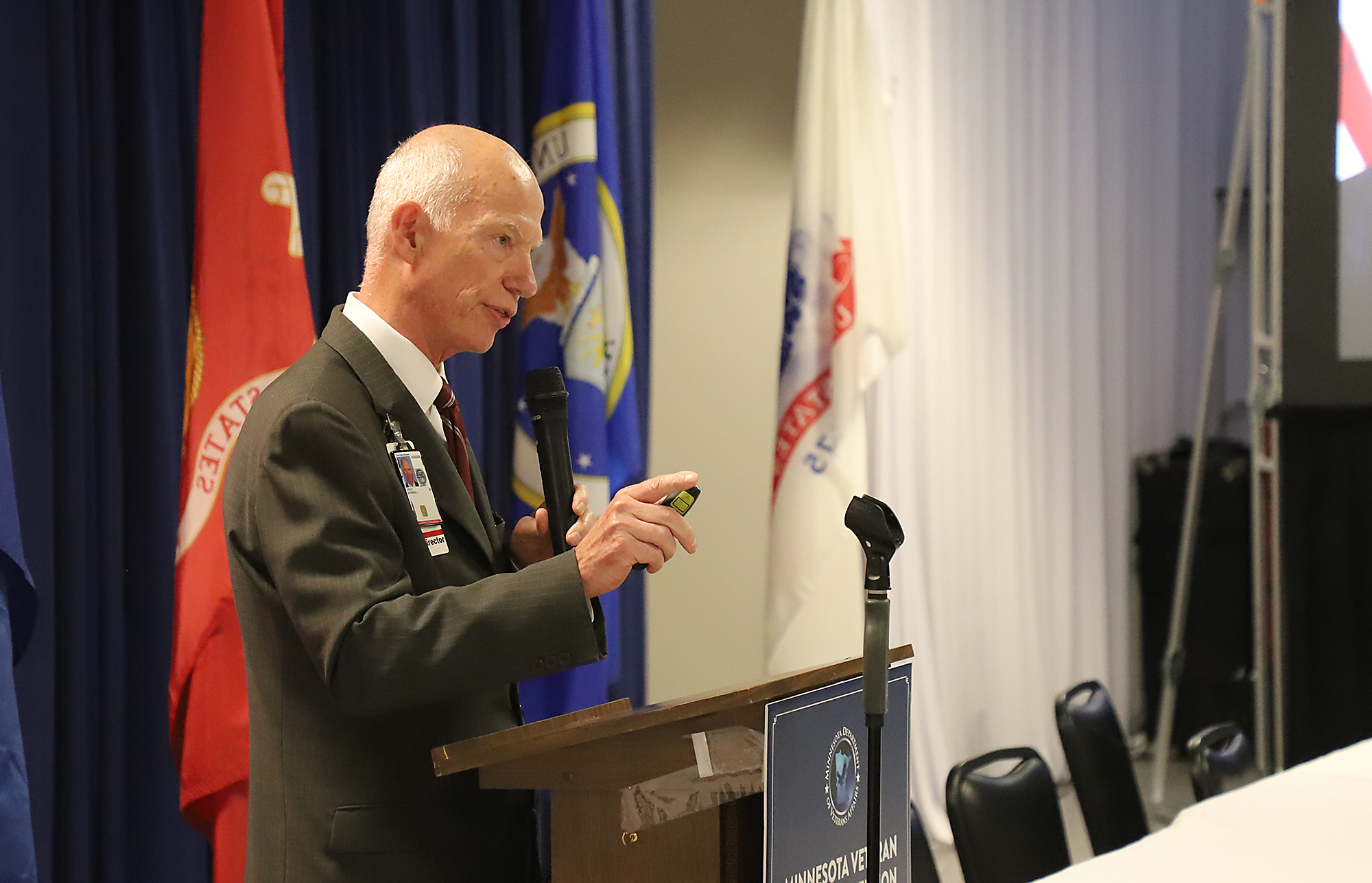
VA Minneapolis Director Pat Kelly spoke of how 6.1 million veterans are not enrolled in VHA care. He spoke of isolation from the veterans community as a statistical factor in suicides.
Kelly talked about the VA’s efforts to reduce opioid addiction; VA’s focus on sleep, pain and oncology; and VA’s expansion of Sgt. Gordon Fox Suicide Prevention Grants through Westcare Minnesota. Westcare provides peer support and case management. The phone is 612-474-3711.
Kelly listed firearm security, debt management, community partnerships and the 988 suicide-prevention line as other VA tools.
The COMPACT Act of 2020 required the VA to provide free, immediate emergency suicide care for eligible veterans and former servicemembers, Kelly added.
The Minnesota Department of Veterans Affairs hosted the suicide prevention summit. MDVA Deputy Commissioner Eric Meittunen for Healthcare said his agency had staff members called navigators who assist veterans with benefits they may not realize they have.
Veterans can call the LinkVet phone line at 888-546-5838 (888-LinkVet) for direct assistance with finding veterans benefits.
Dial 988 and press 1 to reach the Veterans Crisis Line.
Other speakers ranged from Will Funmaker of the Great Lakes Area Tribal Health Board to Every Third Saturday co-founder Tom McKenna to area hospital officials, all speaking about their suicide prevention efforts.
Cre Larson, director of Itasca County’s First Call for Help, a mental health crisis response service, especially moved the audience with how the resource program has been successful in helping people facing crisis, to include preventing veteran suicides.