Legislature: No to disabled vets; yes to Guard

Legislature makes Minnesota CTF an advisory panel
ST. PAUL — The Minnesota Commanders’ Task Force asked lawmakers in St. Paul to do one thing this session: increase the Disabled Veterans Homestead Property Tax Exclusion.
Rising house values continue to diminish the benefit as it has been 18 years since the Legislature last adjusted the exclusion. Commanders of the congressionally chartered veterans organizations asked lawmakers to increase it from $300,000 to $450,000 for 100 percent P&T disabled veterans and from $150,000 to $225,000 for veterans rating 70 to 100 percent.
“It was a narrowly divided legislature,” said Legislative Director Paul Hassing. “We had hoped that the roadblocks of the past would clear, but they didn’t. However, 2027 will have a new set of lawmakers, and that may open the way.”

Some lawmakers throw out big figures to hype the impact. However, Trent Dilks, legislative director for the DAV of Minnesota, countered that by doing the actual math.
He said the tax relief will have an estimated 0.12 percent impact statewide on the property tax market.
“Why is it that the government wants to honor veterans on certain holidays, then turn around and not back it with deeds, like a tax break? Otherwise, it is just words” Dilks asked.
Veterans Omnibus Bill
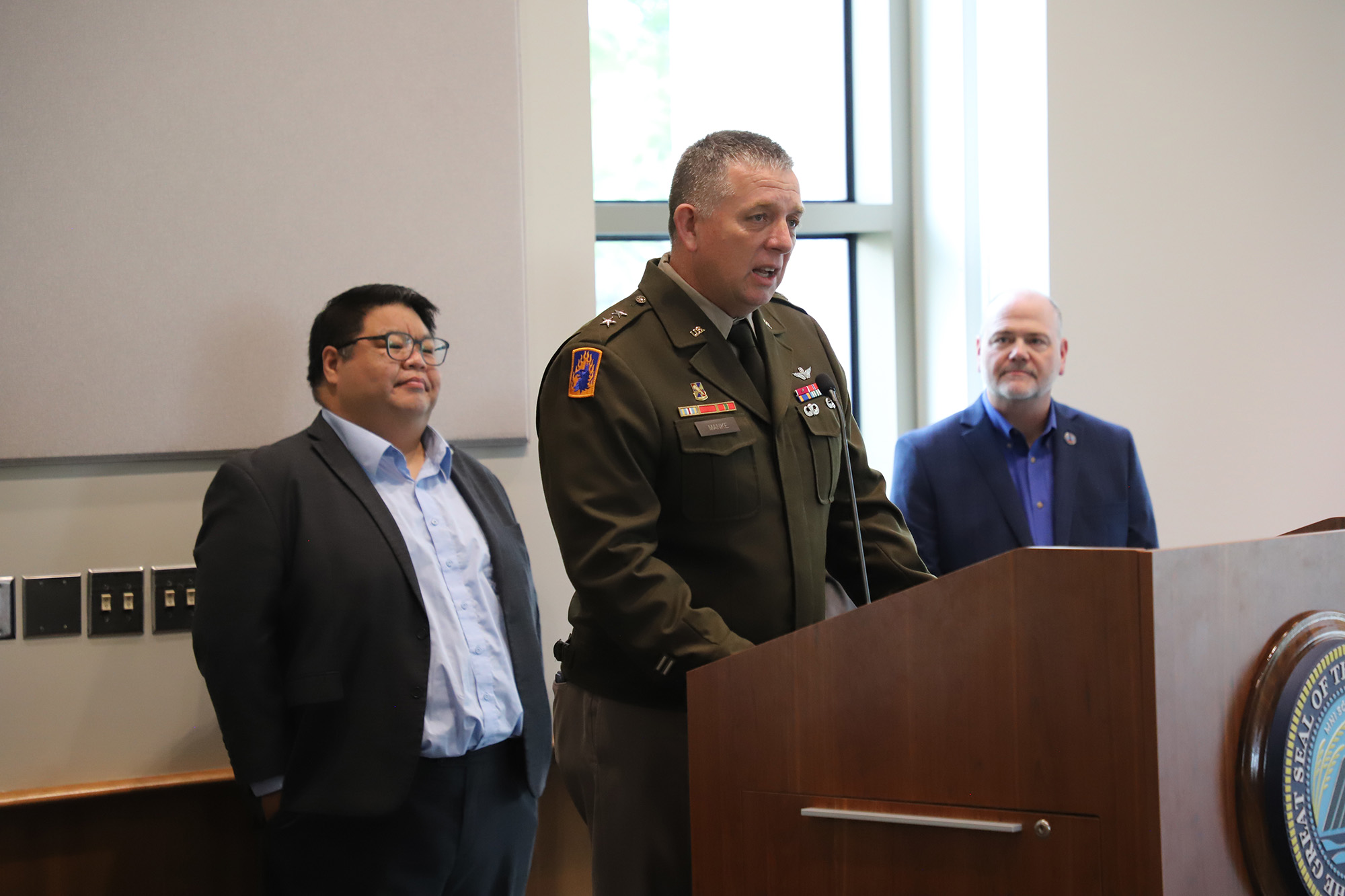
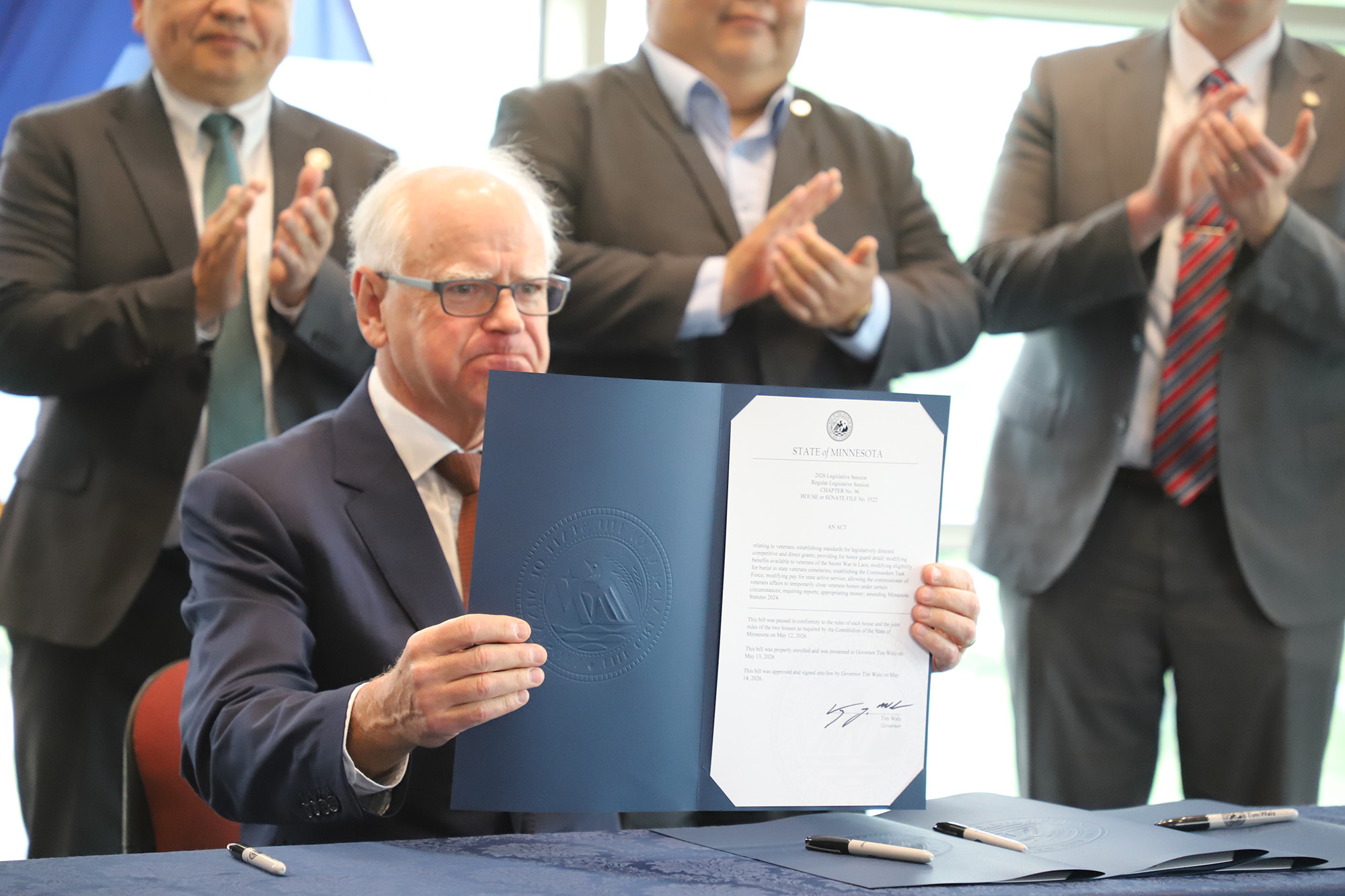
Five veteran-related bills were pulled together to form the Veterans and Military Affairs Omnibus Bill. It was signed into law by Gov. Tim Walz on May 23, with a ceremonial signing in front of veterans June 9 in St. Paul.
Here is what is in the bill:
- Veterans of the covert Secret War in Laos, often called the SGU for the CIA-funded Special Guerilla Units, become eligible for the veteran designation on driver’s licenses and ID cards, become eligible for burial in state veteran cemeteries, become eligible for veterans preference in state and local government employment and become eligible for honor guard services for their funerals.
- It increases base pay for National Guard members E-1 to E-4 when they are called up for service for the first time since 1997. It currently is $130 a day. After Nov. 1, it will match a rate set by the federal Defense Finance and Accounting Service tables, which works out to $186 a day, or about $15.5 an hour for a 12-hour day. The tables are updated annually, so there won’t be a need for Legislature-mandated raises.
- Effective Jan. 1, 2027, members of the Minnesota National Guard and federal reservists, and their immediate families, are eligible to be interred in state veteran cemeteries — even if they do not meet federal active-duty requirements. Prior, they needed 181 consecutive days of active duty to qualify for federal veteran status and qualify.
- The Minnesota Commanders’ Task Force — a group comprising congressionally chartered veterans organizations with a state presence (The American Legion, DAV, VFW, AMVETS, Paralyzed Veterans of America, Military Order of the Purple Heart, Jewish War Veterans and Marine Corps League) — never was a thing. Sure, it was established in 1988 so the veterans could collaborate on legislative advocacy. Sure, it had rules, such as only commanders vote and votes had to be unanimous to pass.
However, it was merely a loose gathering. No minutes. No money. Just volunteerism and gumption.
In the past two years, the organizations wanted to formalize somehow so they could share expenses more easily and be a better, more organized force. A nonprofit organization was considered, but some organizations could not participate because of their bylaws. In the end, a state advisory panel was the right route.
Codifying the CTF as a panel will have zero cost to taxpayers. The CTF now is forming its rules and looking into how to manage shared funds. One such as example of a shared expense is the system that allows members to contact lawmakers online. Another might be printing brochures listing the legislative priorities.
- The bill tightens rules around grants in an effort to prevent fraud and provide accountability. Provisions to fight claim sharks were not included in the final bill.
- It provides the commissioner of veterans affairs with the ability to close a veterans home temporarily after receipt of a termination notice from the Centers for Medicare and Medicaid Services. However, a permanent closure remains up to the Legislature.
- This is the off year of the biennium, so the bill did not need to provide operational funding.
Other vets legislation
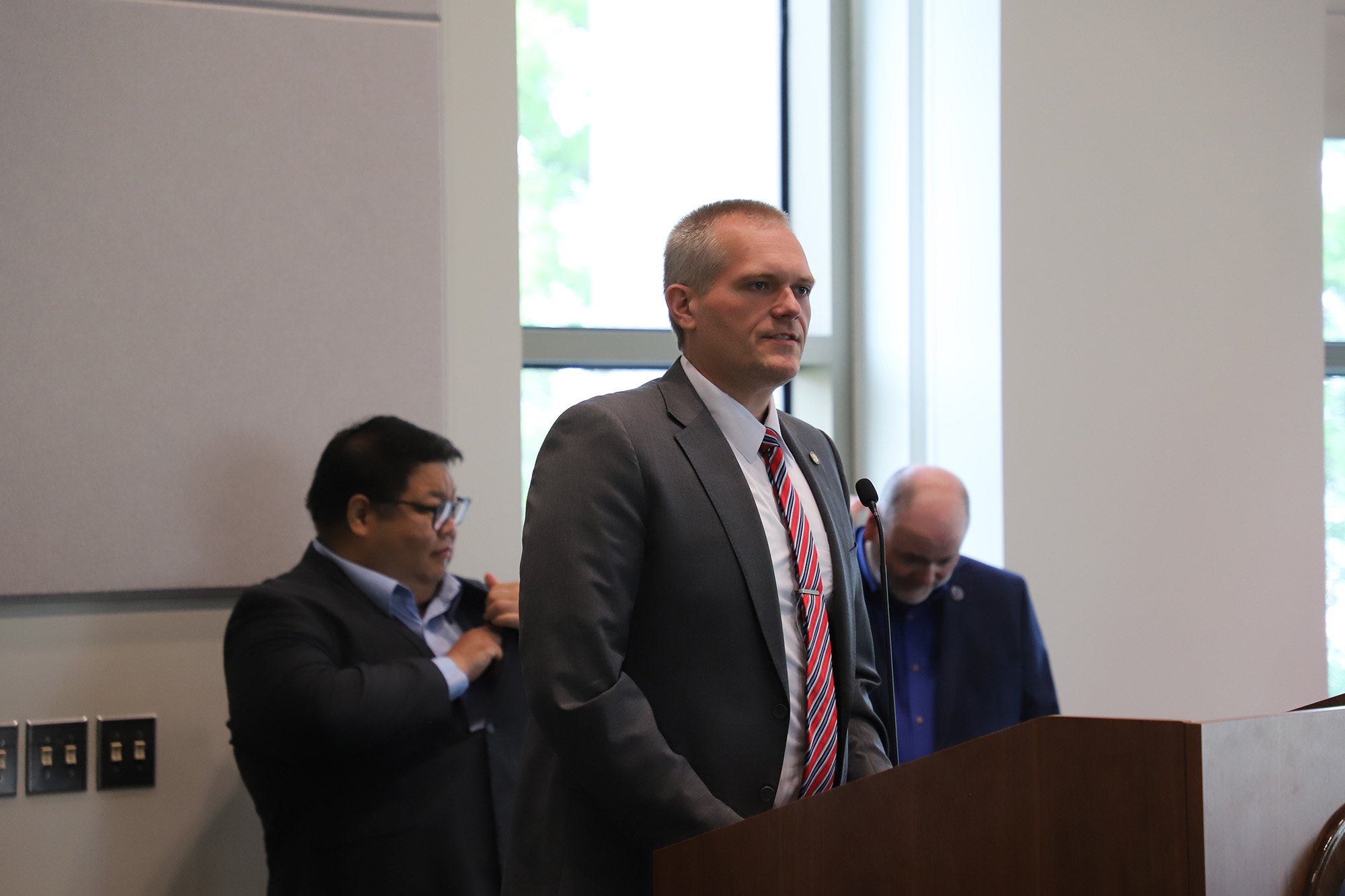
Other veteran-related bills crossed the finish line, too. Here they are:
- $15 million in state bonding funds for asset preservation in the Minnesota Veterans Homes and Veterans Cemeteries.
- $45.17 million in repurposed bonding funds to renovate the Hastings Veterans Home. These funds were approved in 2023. Commissioner Brad Lindsay said the state was unable to receive federal matching dollars, the state repurposed the language so the money could be used for the renovations.
- $17.2 million in repurposed bonding funds to renovate Building 16 at the Minneapolis Veterans Home.
- $300,000 in bonding money for the Martin County Veterans Office
- $350,000 general fund allocation to the Stillwater Veterans Memorial.
- $100,000 allocation for the Ottertail Veterans Memorial.
- Upon request, school districts must issue an official high school diploma to any Korean War-era or Vietnam War-era veteran who left early to enlist. Family members may request one posthumously on behalf of a deceased veteran. The primary author was Rep. Patricia Mueller of Austin. Sen. Steve Cwodzinski of Eden Prairie was the chief sponsor in the Senate.
- Rep. Kari Rehrauer of Coon Rapids authored a bill that passed unanimously in both chambers. It grants the MDVA commissioner authority to redirect the agency’s non-monetary resources to food insecurity, homelessness or suicide prevention.
In other words, the commissioner can bypass red tape regarding how staff is used so the agency can work with nonprofits on mutual goals.
Gambling
Gambling always is part of the legislative mix these days. Here is the update:
- The Allied Charities of Minnesota, with support from The American Legion and backed by the Minnesota Indian Gaming Association, successfully pushed a measure to update the meat raffle limits.
The update raises the ticket cap from $2 to $5. (Don’t go thinking all meat raffles are going to be $5. It means they tickets can be $5 or less.)
And it raises the prize cap from $70 to $200. The limits were last updated in 1978 and reflect the rising cost of meat and other substantial prizes.
The new law goes into effect on Aug. 1.
- With bipartisan support, the Legislature passed a consumer-protection bill that bans placing bets and trading on prediction market platforms, such as Kalshi and Polymarket. Minnesota became the first state in the nation to enact such a law. It also takes effect Aug. 1.
According to The Minnesota Reformer, the federal Commodity Futures Trading Commission, Kalshi and Polymarket all filed separate lawsuits against the state the day after Walz signed the bill into law.
- Allied Charities of Minnesota, Minnesota Indian Gaming Association, The American Legion and the VFW all stood together in favor of a bill to ban online sweepstakes casinos. While the measure failed, leaders of the organizations said it was good to have major participants in gambling in Minnesota working together for the benefit of all, having set aside differences stemming from the divisive 2023 session.
The bill targeted the dual-currency business model that sweepstakes casinos use. It would not have impacted real-world sweepstakes such as McDonald’s Monopoly or Publishers Clearing House.
The pushback stemmed from lawmakers who felt the wording was too broad and could affect corporate loyalty programs, video game rewards or even the conventional sweepstakes. Also, Minnesota is home to ARB Interactive, one of the largest online sweepstakes casino companies. It employs about 200 people. Its HQ is in Grand Rapids.
Protected class for vets
A bill sponsored by Rep. Matt Bliss of Bemidji called for adding veterans to the Minnesota Human Rights Act and make “veterans” an official protected class, making it illegal to discriminate against servicemembers and veterans across various sectors of daily life: employment, labor, housing, education, public accommodations and public services.
It didn’t pass. The bill stalled in the House Judiciary committee over concerns that it might overlap with federal employment protections for veterans. Ultimately, before that could be answered, they ran out of time.
Bliss has stated he will bring it back next session.