Spectacle Shoppe founder gained his passion in the military
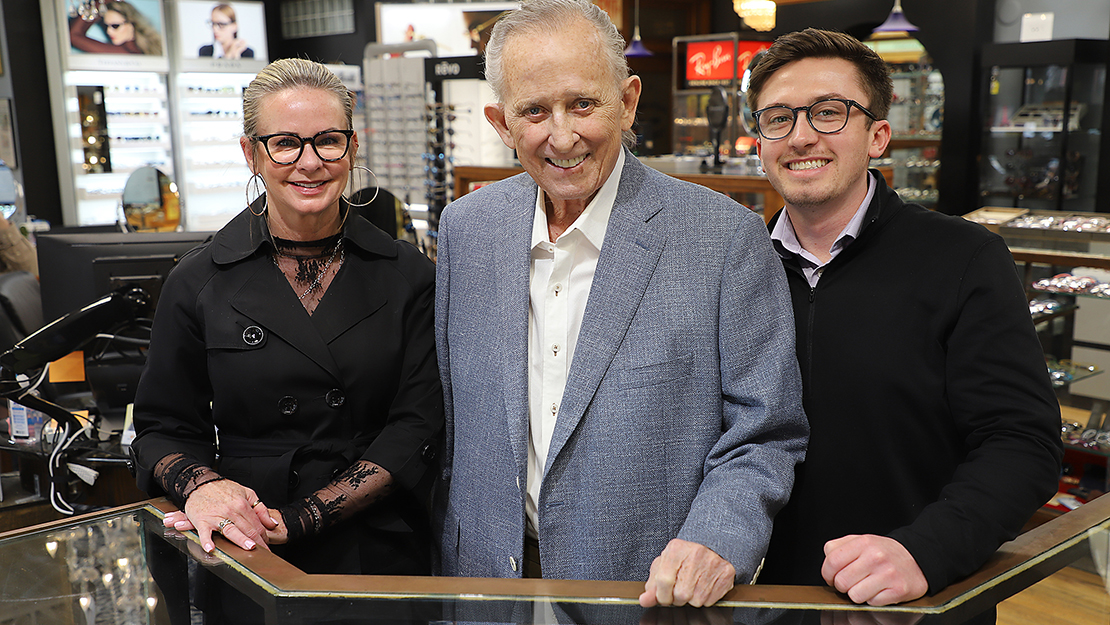
NEW BRIGHTON — David Ulrich was the youngest of eight kids. One day, he asked his father for a quarter.
His dad retorted, “What the hell would you ever do with a quarter?”
Ulrich never asked his father for money again. He began collecting pine cones and would sell them to the U.S. Forest Service at a rate of $100 for a 55-pound bag.

“If I needed shoes, I bought my own shoes,” he said.
He worked for a farmer, picking weeds out of mint plants, and he shoveled snow. He developed his work ethic at a young age.
Ulrich, now 80, is a member of Minnesota American Legion Post 1982, the at-large statewide post, and his story is an example of how the military experience can lead to becoming an entrepreneur. Many folks might be surprised to find that the Twin Cities eyeglass chain Spectacle Shoppe is a veteran-owned business.
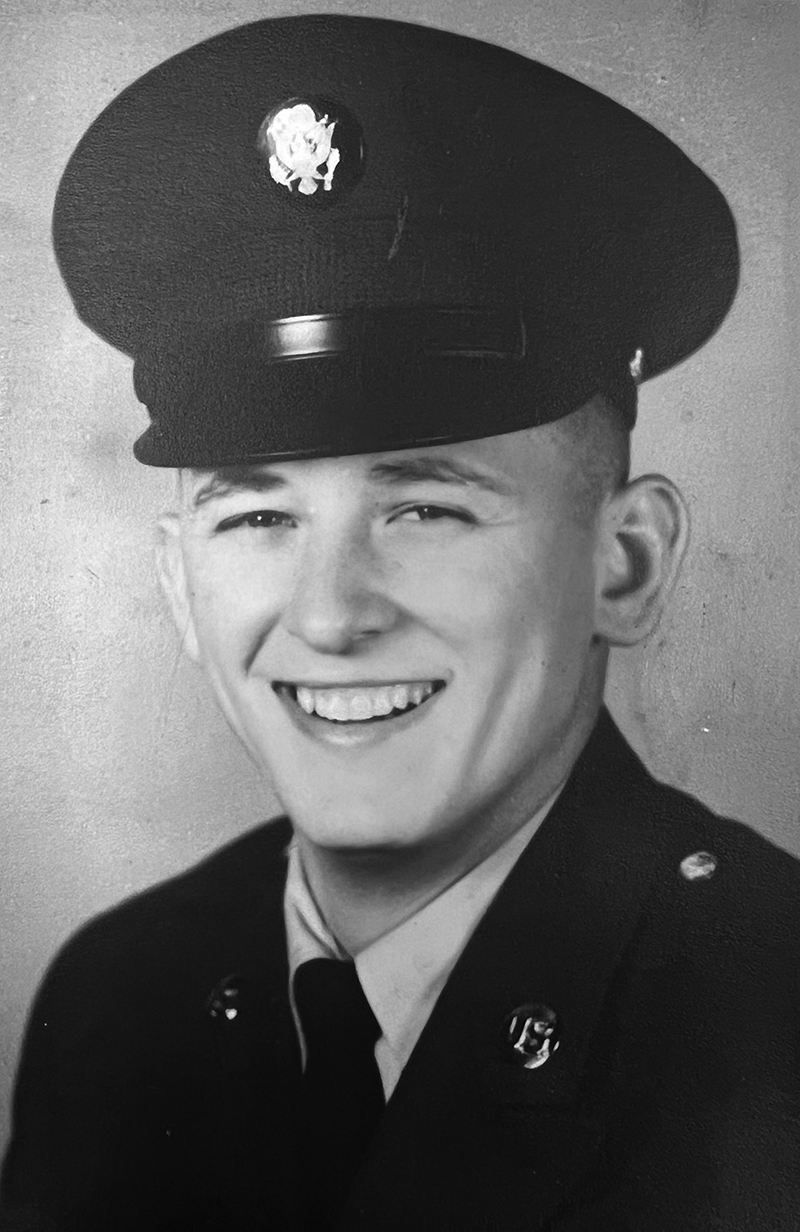
Ulrich graduated from Baraboo High School in Wisconsin in 1963. The town had about 7,600 people in it, and Ulrich said there wasn’t much to do in a town that size. He joined the U.S. Army.
“I wanted to see what was out there,” he said. “I wanted to be in the South, because I had never been in the South. And I wanted to be as far away as I could get, so I got Okinawa.”
Basic training was at Fort Leonard Wood, Mo. The recruits went through testing to determine military occupation, and Ulrich tested well for optical. The instructors asked him whether he was interested in optical training.
“Yeah, I’d love to,” he told them.
Back then, the Army Optical School was at Fitzsimons Army Hospital in Aurora, Colo. He had the MOS of optical laboratory specialist. Back then, it was 42E. (Today, it is 68H.)
The Army sent Ulrich to a unit of 320 people at the 70th Medical Depot in Atlanta. In 1965, the entire depot got orders to go to Okinawa. Ulrich said they left in November, knowing they would miss Christmas.
They didn’t simply fly across the Pacific. It was a 14-day voyage via ship.
This was a time when the Army’s medical supply system was struggling to meet the demands of Vietnam and to resupply itself through the world. The U.S. surgeon general investigated and found inventory control to be a major issue — leaders couldn’t receive a full picture; subordinates would horde materiel to avoid being caught short. Another problem was the medical system wasn’t designed to support both peacetime and wartime operations.
Thus, Ulrich landed in the Army medical world as its leaders were reshaping how things were done and testing new gear. He got to work with the latest equipment not yet found in much of the civilian sector.
At first, he was stationed at Army Hospital Ryukyu Islands, which provided medical treatment for U.S. forces operating throughout the Far East, including casualties from the Vietnam War. Gurneys would carry soldiers who were missing limbs.
The 70th’s optical team set up shop in a new bowling alley. Soon, they were moved to Naha Air Base.
Naha Air Base is adjacent to the Port of Naha and the Army’s Machinato Supply Depot. Together, they were used to receive large quantities of Agent Orange and store them for subsequent shipment to Vietnam. Up the island, Kadena Air Base was also part of the shipping and storage system.
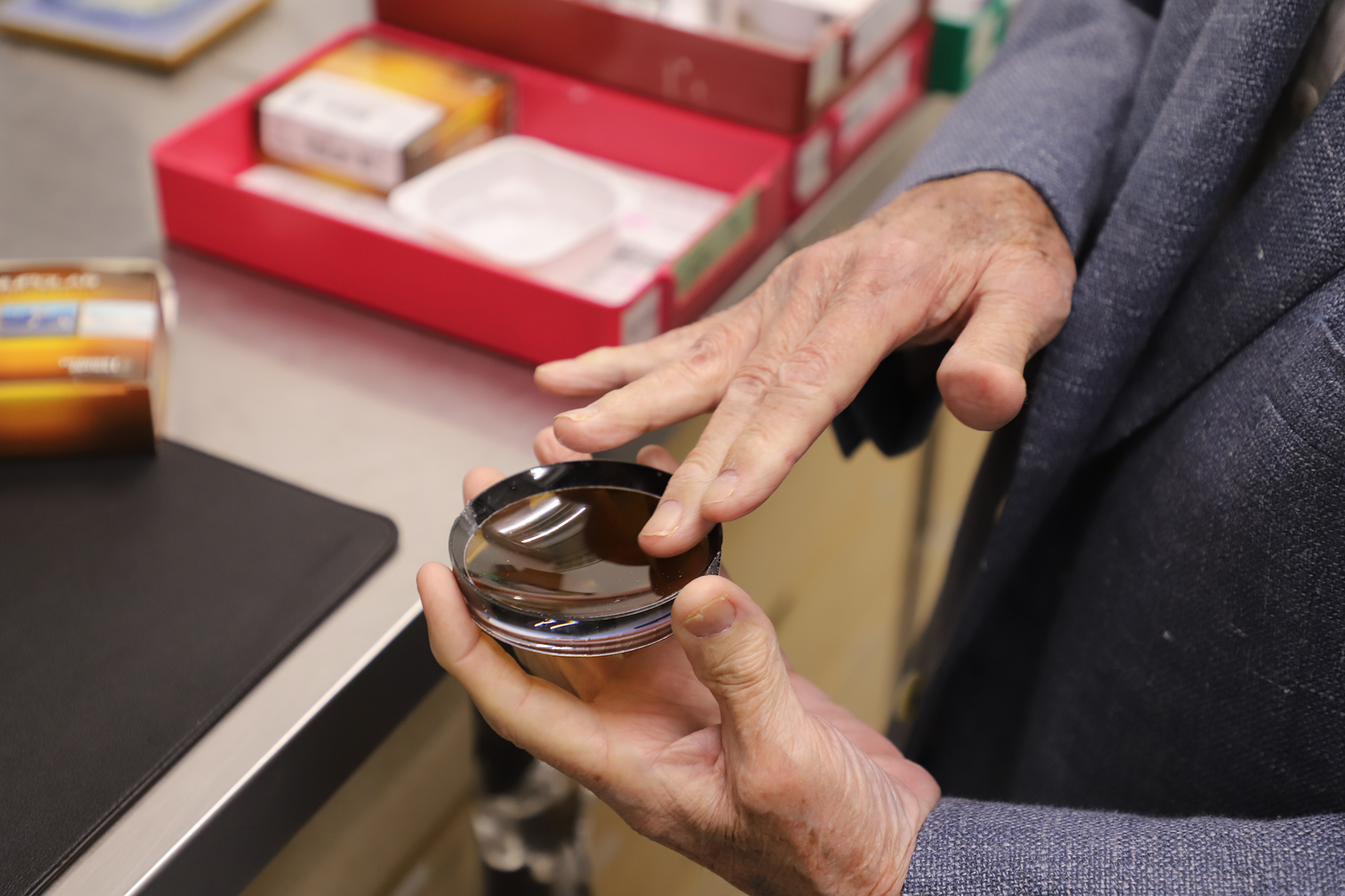
Ulrich and his fellow opticians set up the optical shop to manufacture lenses and shape them to fit frames. If needed, there was another place in Vietnam for soldiers to get them adjusted, he said.
Troops then and now call G.I. glasses BCGs, for “birth-control glasses.”
The G.I. glasses Ulrich was working with were the Vietnam-era, horn-rimmed glasses. The most-famous version of BCGs came out later, with the brown S9 design in the 1970s and MS9 and FS9 in the 1990s. In 2012, the military finally rolled out the black 5A streamlined design.
Ulrich and his fellow opticians also handled cool Air Force glasses, such as bayonet temple aviator sunglasses designed to be worn under helmets.
His enthusiasm for eyewear shines. He says things like, “The aviators were not polarized because that would limit their vision through windshields.”
Their job entailed learning to paint glass eyes, too. He shadowed ophthalmologists and optometrists, learning what he could along the way.
Ulrich left Okinawa near the end of 1967. The Army optical friends he made were lifelong, such as Dave Williamson of West Des Moines, Iowa.
The first job out of the Army was for Benson Optical in Beloit, Wis. Ulrich was there for three months when a doctor out of Oshkosh recruited him away, gave him a raise and let him manage the store. From his Army time, he knew how to run all the new precision grinders and edgers that sped up the time it took to make lenses.
The old way, Ulrich said, involved cutting glass with a steel tool while trying not to break the glass.
The store was in downtown Oshkosh, and he kept asking the owner to open a store along the new freeway — Interstate 41. The boss didn’t want to do it.
Ulrich looked around for opportunities.
“These guys from the Twin Cities found me and offered me 30 percent ownership,” he said. “They opened five stores in three years.”
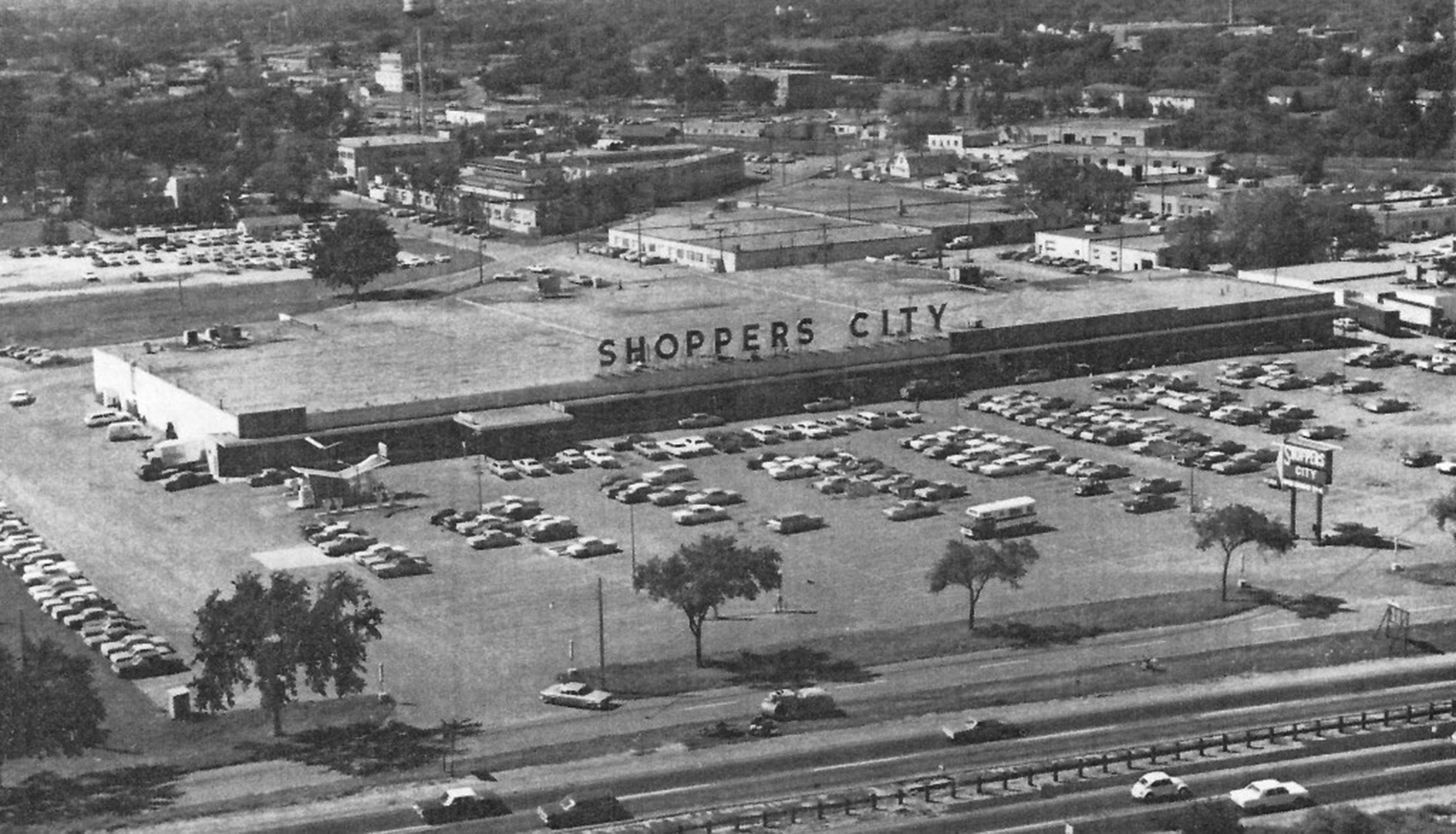
The Shoppers City at 3700 Highway 100 in St. Louis Park in 1968 (by Highway 100 and Wooddale Ave. S.). The stores are remembered today for being one of the first retailers in the Twin Cities to be open on Sundays.
It was the optical department inside five of the seven of the Shoppers’ City stores. (Columbia Heights, Coon Rapids, St. Cloud, Bloomington, Brooklyn Park.)
Ulrich said he was there 1969 to 1974. At some point, Massachusetts-based Zayre bought the Shoppers’ City stores.
“The old manager was often busy on the floor of the store, working like everyone else,” he said. “The new manager, I went to his office. He had his feet on the desk and was smoking a cigar. I didn’t like that. He introduced himself, and I said thanks. The next day, I told my partners I’m quitting. I said the store won’t make it in two years.”
Zayre abandoned its Shoppers’ City stores in 1980. Zayre itself went the way of the dodo by 1990 but still exists via one of its subsidiaries, discount chain T.J. Maxx.
Ulrich went to do industrial safety glasses for 3M, Sperry Univac and Land O Lakes. For three years, he performed various tests to check for quality and toughness.
Finally, in 1977, he started the Spectacle Shoppe in a New Brighton strip mall that had indoor walking space and a gym downstairs.
That mall went bankrupt in 1994. He knew the owner of the adjacent property, and he asked that man to build another strip mall. That’s where the New Brighton Spectacle Shoppe is today. Ulrich made the property owner a quarter business owner, which meant the property owner paid a quarter of the rent himself.
Ulrich designed the interior space himself. It expanded into a nearby State Farm office 12 years ago.
Spectacle Shoppe today has other locations on Grand Avenue in St. Paul, Uptown in Minneapolis and in St. Louis Park. Over the years, Ulrich wasn’t afraid to try new things. There were past locations in New Hope, the St. Paul skyway and Rogers.
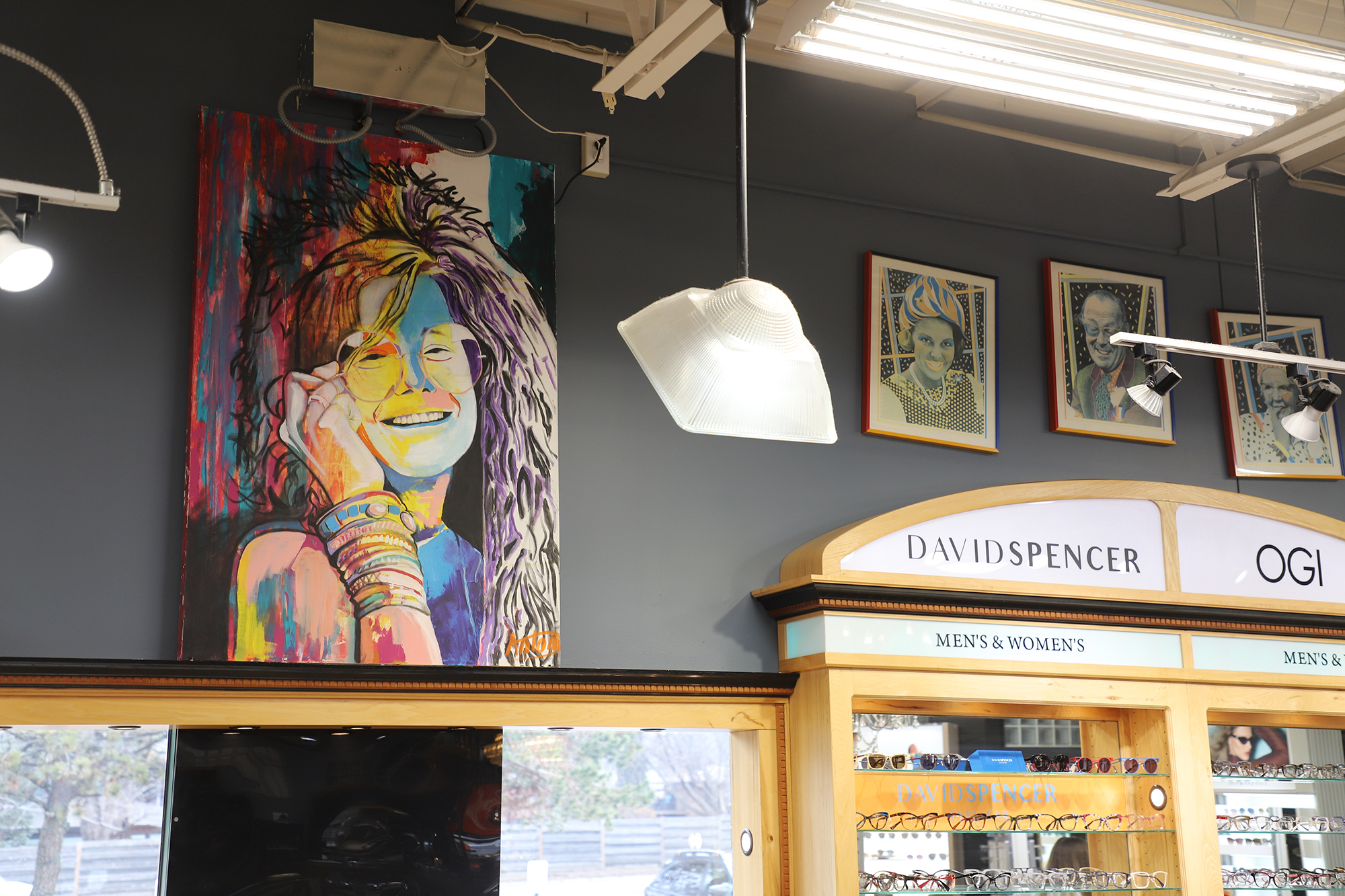
Ulrich’s wife, Beth, and son, Logan Szalay, help to run the business these days.
“The big thing my dad did was creating lenses in-house,” Szalay said. “He wanted speed, to provide one-hour service.”
The son added that much of the American eyeglass industry of the 1970s lacked fashion. He said his father ventured to Europe and realized how further along they were. He brought stylized and vintage looks to his stores while many optical chains saw glasses as a utility function.
“We now have one of the largest vintage collections in the United States,” he said.
Spectacle Shoppe has its lab in the New Brighton store and can manufacture lenses right there for many purposes: single vision, progressives, bifocals, sunglasses, safety, golf, shooting and more.
Veterans and active servicemembers need only ask for the military discount, Szalay said.
He said the stores really emphasize the one-on-one experience, with coffee, cookies and old-school sodas, when they are trying to find the perfect pair of glasses. Appointments are best, he said, but walk-ins are fine, too.
There are 40,000 frames throughout four stores.
“There’s a frame for everybody,” he said.